
SRE | Recovery Engineering
Reliability is not the words “high availability.” Services have targets, changes have gates, failures have runbooks, and recovery has reconciliation.
Service objectives
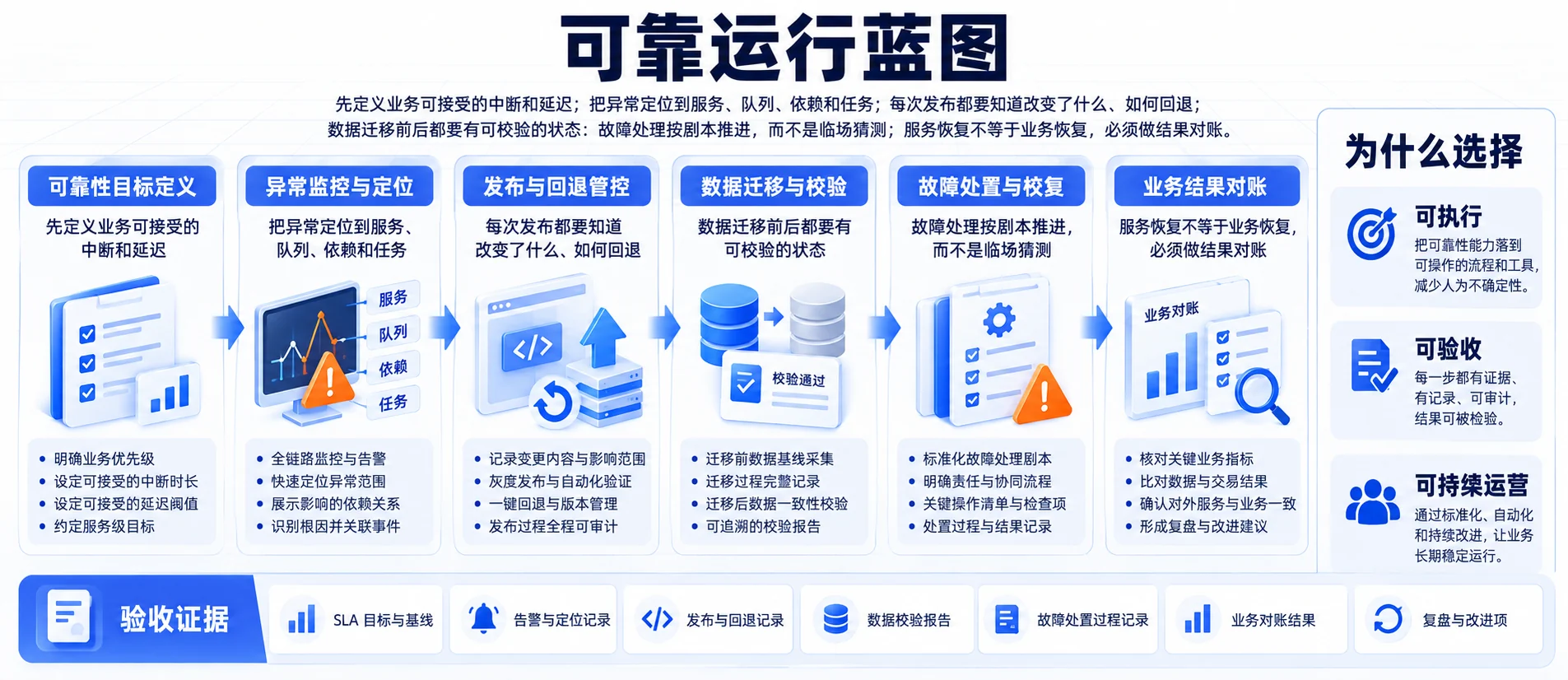
Define acceptable interruption and latency first
Set availability, completion, recovery-time, and recovery-point targets by workflow and tenant tier, with monitors that can verify them.
Execution steps
- 01
Identify critical workflows
- 02
Define SLO, RTO, and RPO
- 03
Break down service, queue, dependency metrics
- 04
Set error budget and escalation
Health checks
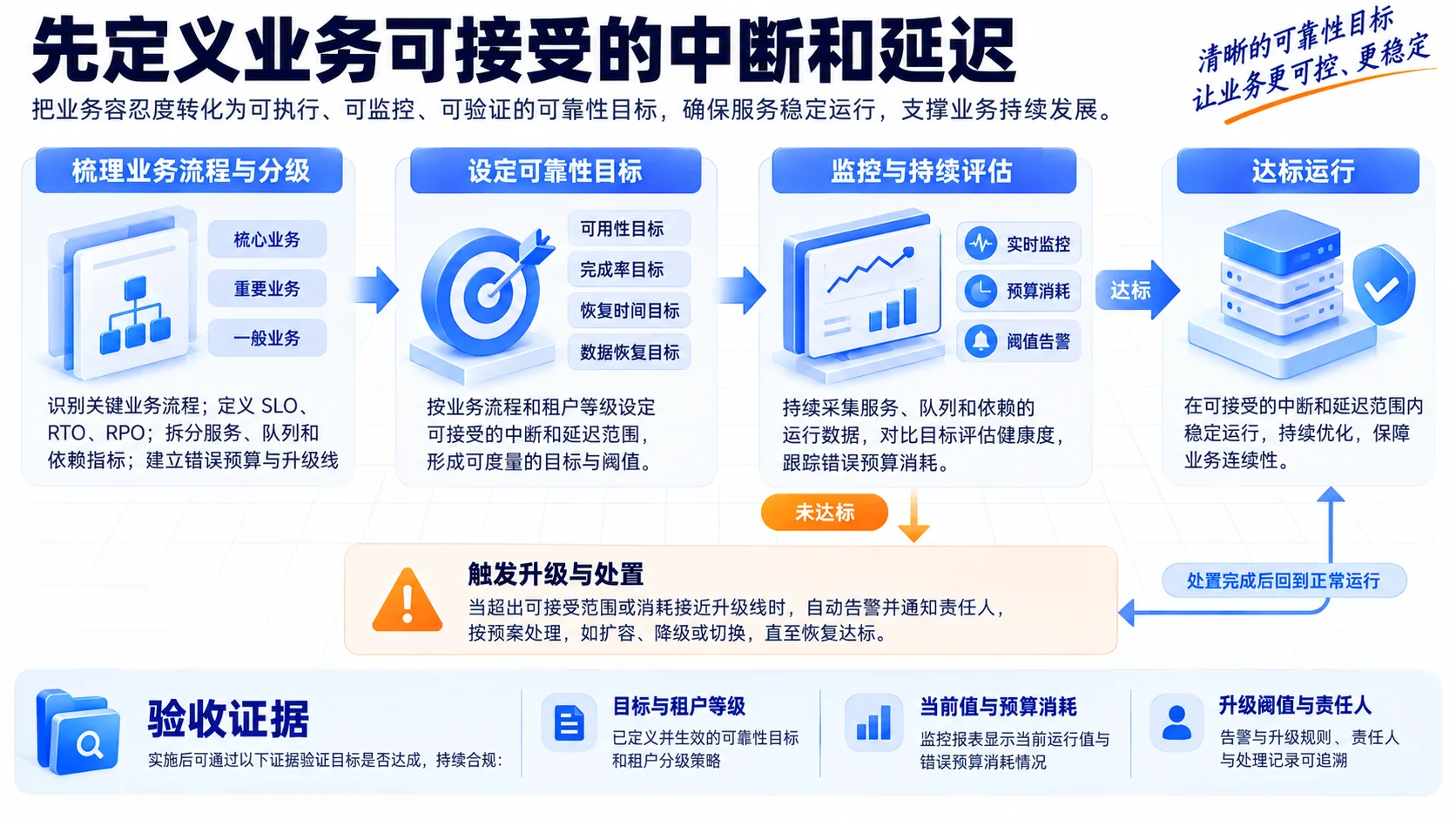
Localize issues to service, queue, dependency, and task
Health includes queue backlog, tool failures, model response, writeback result, and tenant-level errors, not just process liveness.
Execution steps
- 01
Check services and dependencies
- 02
Check queues, tasks, retries
- 03
Segment errors by tenant and flow
- 04
Alert and hand off to on-call
Change gates
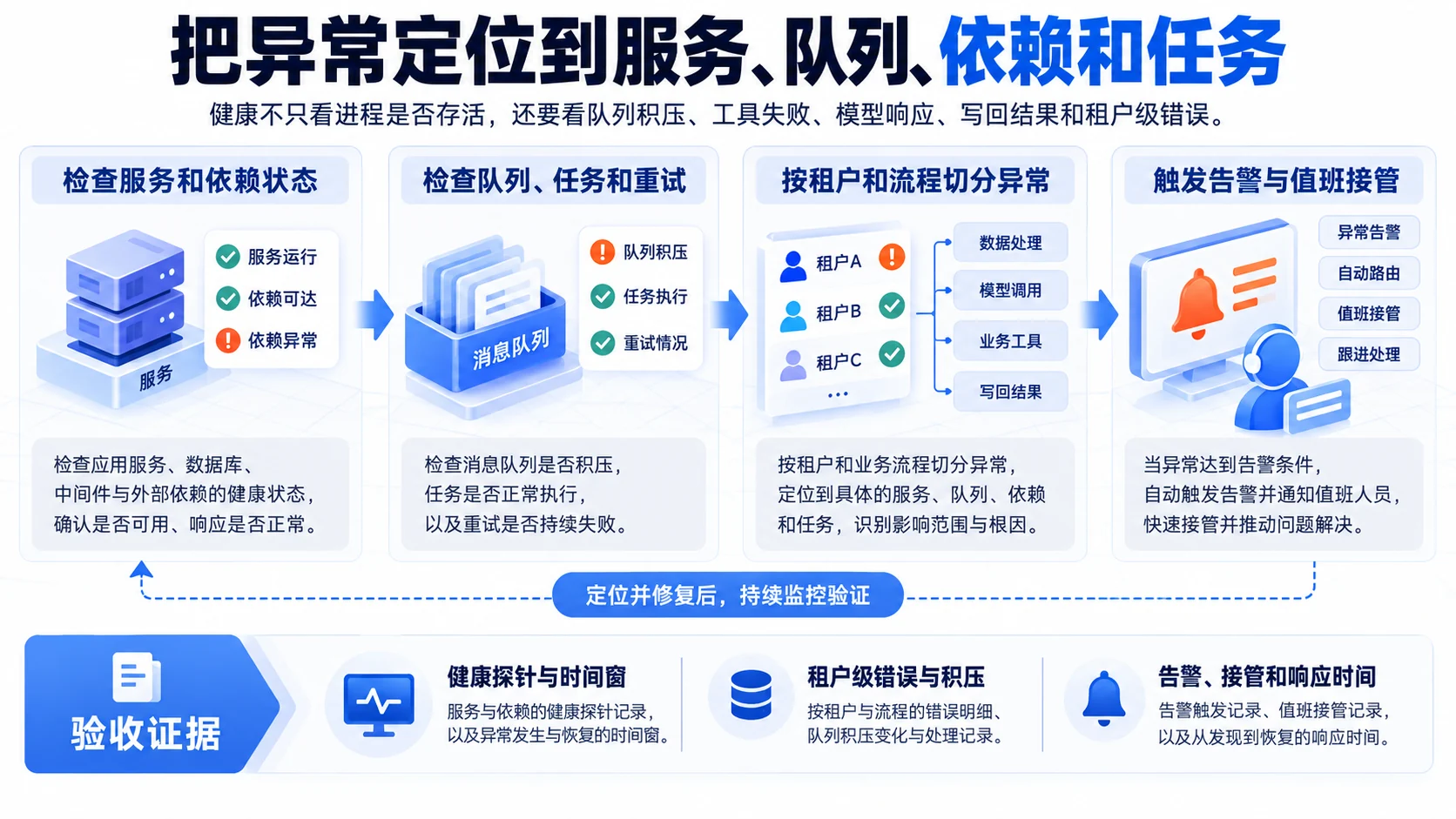
Know what changed and how to roll back every release
Code, policy, model, prompt, tool, and infrastructure changes share one record and are validated in the target topology before expansion.
Execution steps
- 01
Generate change list and impact
- 02
Pass test, review, approval gates
- 03
Roll out and observe error budget
- 04
Rollback or stop propagation
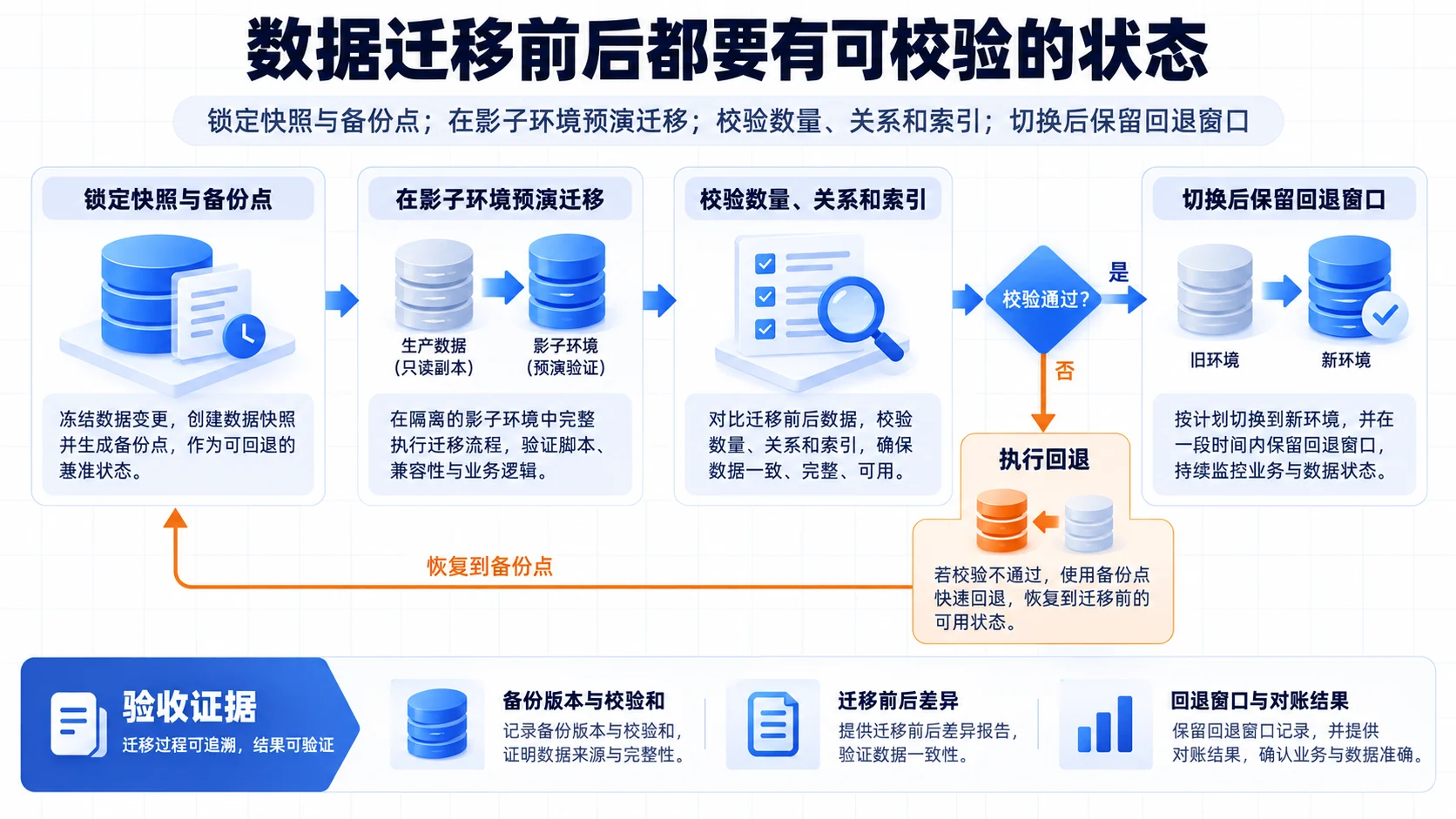
Migration and backup
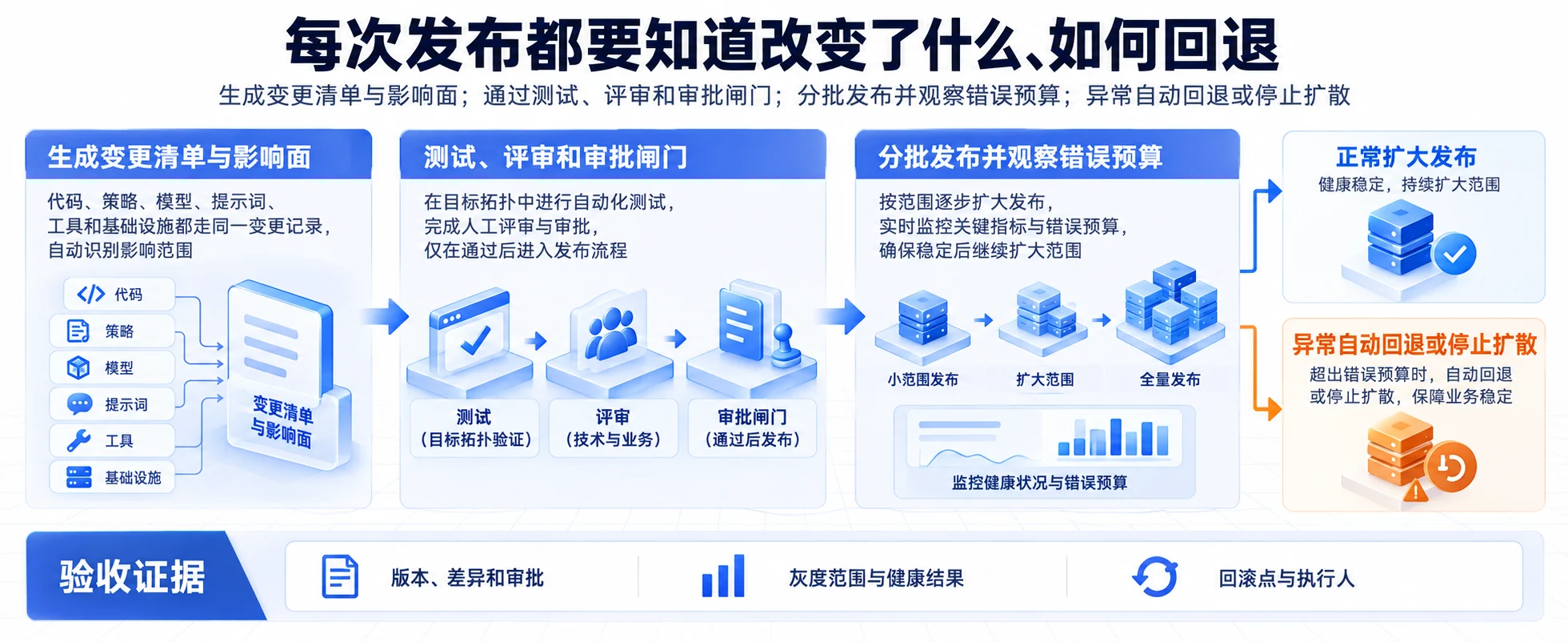
Validate state before and after migration
Migration is a repeatable flow of backup, rehearsal, validation, cutover, rollback, and reconciliation, not a one-off script.
Execution steps
- 01
Lock snapshot and backup point
- 02
Rehearse in a shadow environment
- 03
Validate counts, relations, indexes
- 04
Keep rollback window after cutover
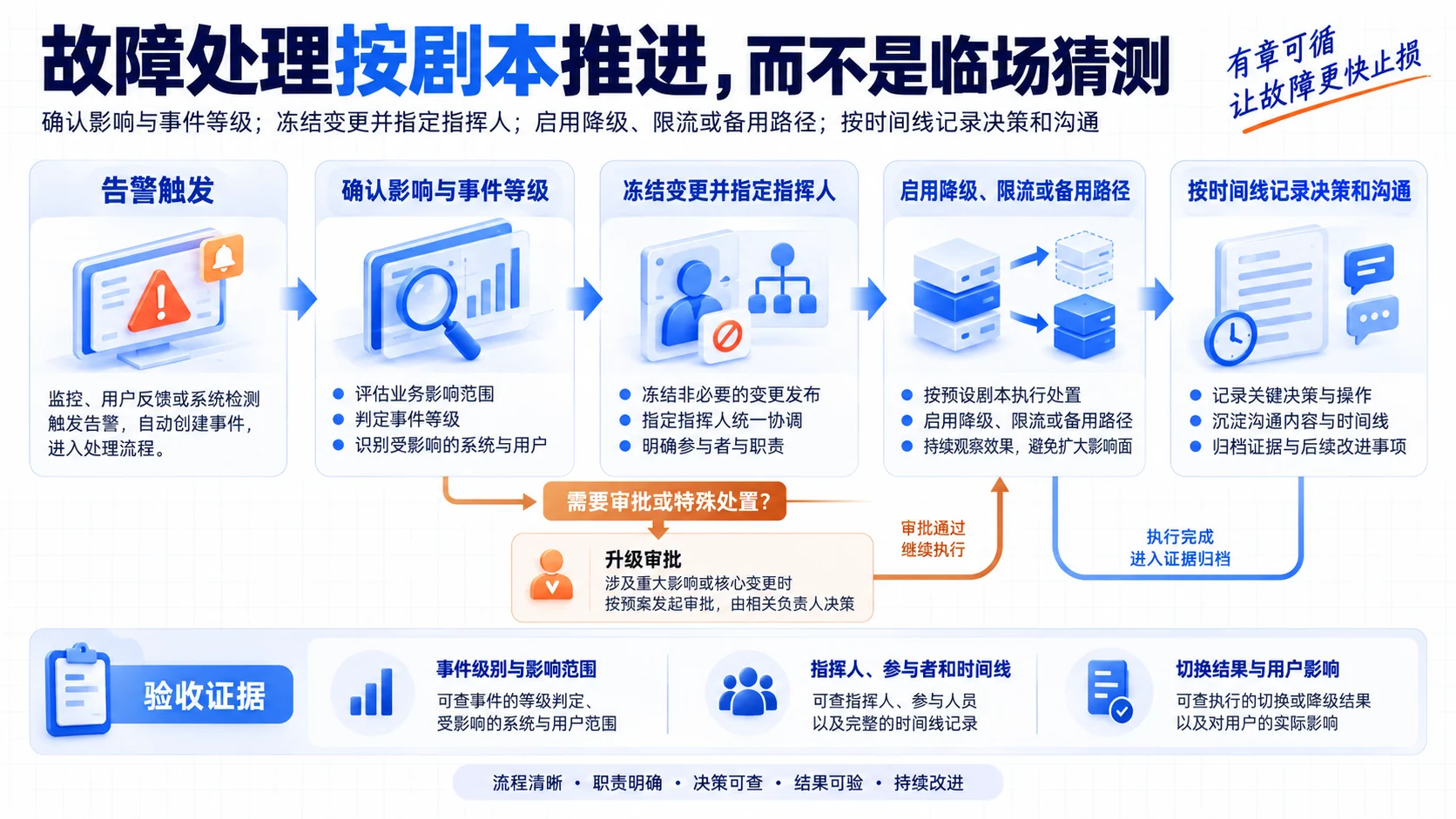
Incident and failover
Run incidents by playbook instead of improvisation
After an alert, follow impact, ownership, communication, degradation, failover, and evidence steps to limit blast radius.
Execution steps
- 01
Confirm impact and severity
- 02
Freeze changes and assign commander
- 03
Enable degrade, throttle, or fallback
- 04
Record decisions and communication
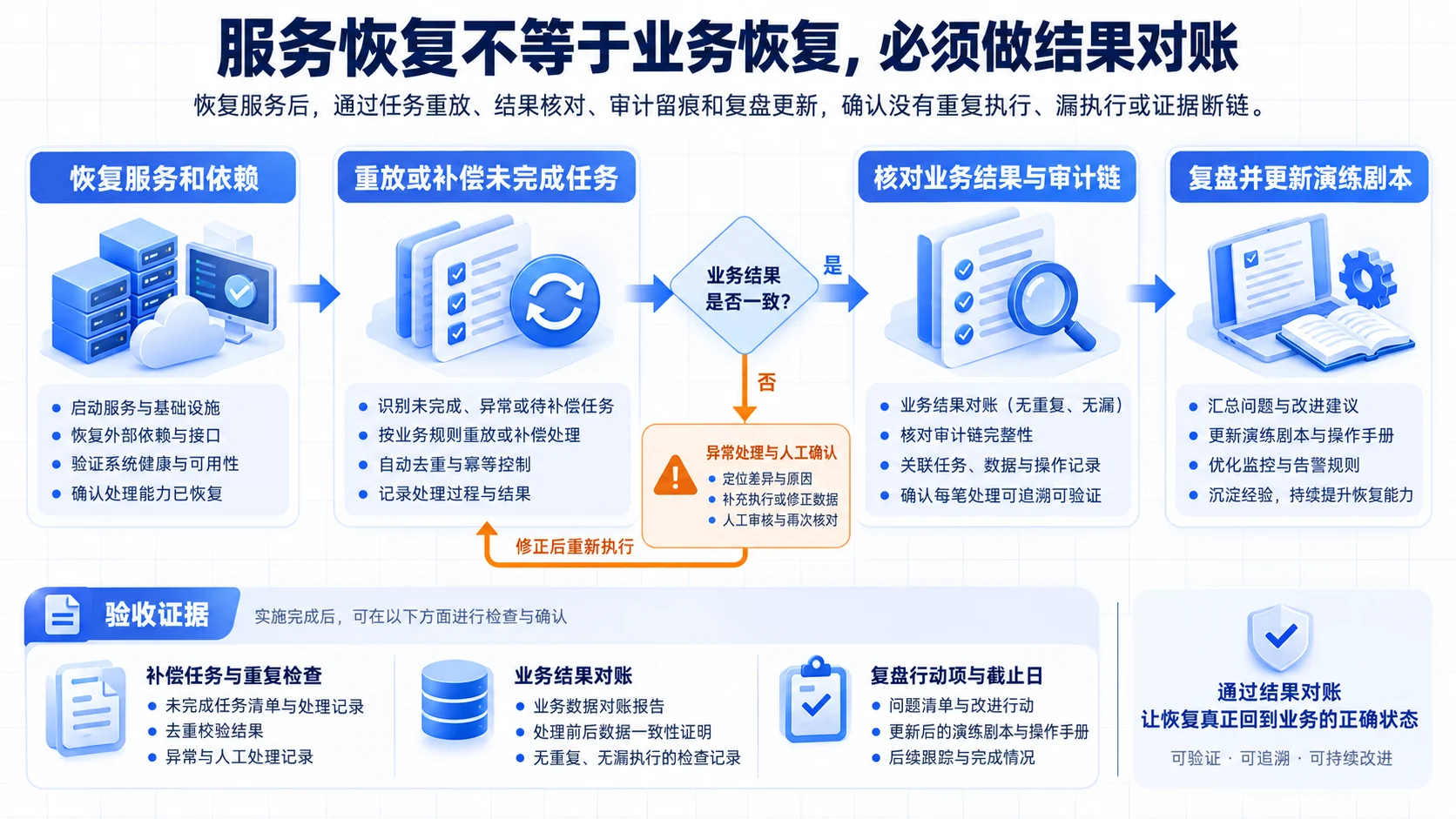
Recovery review
Service recovery is not business recovery; reconcile outcomes
After recovery, reconcile tasks, writes, audit, and notices to catch duplicate work, missed work, and broken evidence.
Execution steps
- 01
Restore services and dependencies
- 02
Replay or compensate unfinished tasks
- 03
Reconcile outcomes and audit
- 04
Review and update runbook
Bring Reliability requirements into a real evaluation
We map the principle to an acceptance checklist for your data, workflow, deployment boundary, and owners.
Region, data, model, operations, and acceptance requirements still need to be confirmed item by item in the project assessment.