
01
Industry Use Case
Bring governed digital labor intothe retail store-operations workflow
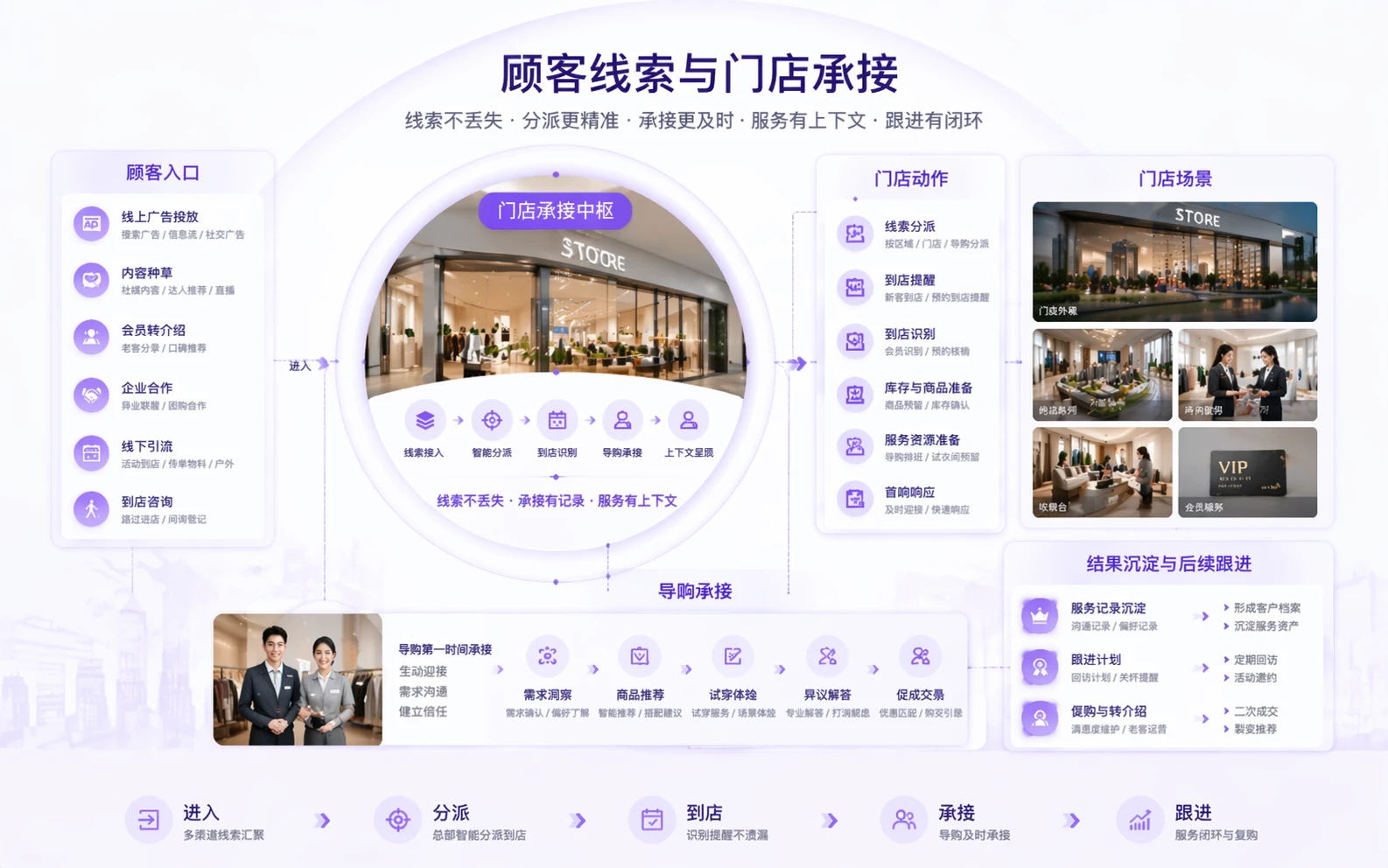
Bring customer leads from messaging, campaigns, and stores, together with store handoff, quote and order progression, delivery coordination, after-sales follow-up, and repurchase motion into one retail operating chain.
Built for retail brands with HQ-plus-store operating models, regional retail networks, and teams that need one continuous customer chain.
Store handoffDelivery coordinationRevisit and repurchase
Industry pressure
Retail teams are rarely missing campaigns. They are blocked when customer, store, delivery, and revisit work do not live on one operating chain.
From lead intake and store handoff to order delivery and revisit-driven repurchase, retail teams need one system that keeps HQ, stores, service, and customer context together.
02
From quotes and orders to delivery and after-sales service, store, regional, and service teams create backlog and unclear ownership when they do not share one state.
03
Revisit, repurchase, and referral opportunities that matter most for long-term retail growth still depend on memory and private messaging in many teams.
Core scenarios
Retail teams can start with these three store-operation workflows
There is no standalone retail seed here, so this page is grounded in the existing channel-store-delivery workflow and consumer operating materials, centered on the clearest path: intake, fulfillment coordination, and revisit-driven growth.
Lead intake and store handoff
Move campaign, messaging, walk-in, and referral leads into one triage chain so target store, first response, pickup SLA, and next actions write back into the same record path.
Better first-response speed
Less lead leakage
More visible store pickup
Quote, order, and delivery coordination
Keep solution shaping, quote approval, order progression, delivery scheduling, and after-sales service inside one execution chain instead of letting stores, regions, and service teams chase status separately.
More continuous conversion and delivery
Less coordination friction
More control over high-risk steps
Revisit, repurchase, and referral follow-through
Build one governed path around satisfaction callbacks, after-sales handling, repurchase signals, and referral identification so each transaction can turn into an ongoing relationship.
Better revisit reach
Better repurchase visibility
Stronger store-led relationship growth
Why NexusClaw
Retail teams need more than an assistant that can send messages. They need an execution system for store operations.
What determines whether this works in production is whether customer state, store pickup, delivery plans, after-sales handling, and revisit opportunities can live inside one governance framework.
Start with the intake, delivery, and revisit chain instead of replacing the whole retail stack at once
NexusClaw fits retail teams that need one governed path across customer intake, order and delivery coordination, and revisit-driven repurchase before anything heavier.
AI supports routing, summaries, reminders, and repurchase signals without crossing pricing or high-risk service boundaries
The system can suggest lead routing, summarize customer context, surface delivery reminders, draft revisit guidance, and identify repurchase signals, but it does not confirm prices, approve critical steps, or auto-close sensitive after-sales cases.
HQ, store, service, and customer records stay on one execution chain
Every pickup, quote, delivery, service interaction, and revisit action can write back into the core system so HQ, regional leaders, stores, and service teams keep working from the same facts.
See NexusClaw against a real retail store-operations workflow
If you are evaluating how a retail organization can move customer intake, store handoff, order and delivery coordination, after-sales revisit work, and repurchase follow-through into one governed chain, the most useful next step is a demo built around a real store-operations workflow.