
01
Industry Use Case
Bring governed digital labor intothe utility service and outage workflow
Bring subscriber onboarding, premises, service points, meters, usage readings, service requests, outage handling, and energy programs into one utility operating chain.
Built for electricity, gas, water, and integrated energy providers coordinating onboarding, service, outage response, and energy programs.
Subscriber onboardingService requestsOutage response
Industry pressure
Energy teams are rarely missing ticketing. They are blocked when subscriber, meter, service, and outage work do not live on one execution chain.
From onboarding and activation to usage, service handling, and restoration, utility teams need one system that keeps Premise, Service Point, Meter, Service Request, and Outage work together.
02
Service requests, exception escalation, and outage work move across service, operations, and field teams, and response becomes unstable when state is inconsistent.
03
Accountability, auditability, and restoration timing matter deeply in this sector, yet many teams still pass requests, priorities, and outcomes by hand.
Core scenarios
Energy and utility teams can start with these three service workflows
This page is not a heavyweight billing-core replacement. It is organized around the clearest production path: onboarding, service handling, outage response, and ongoing energy program operations.
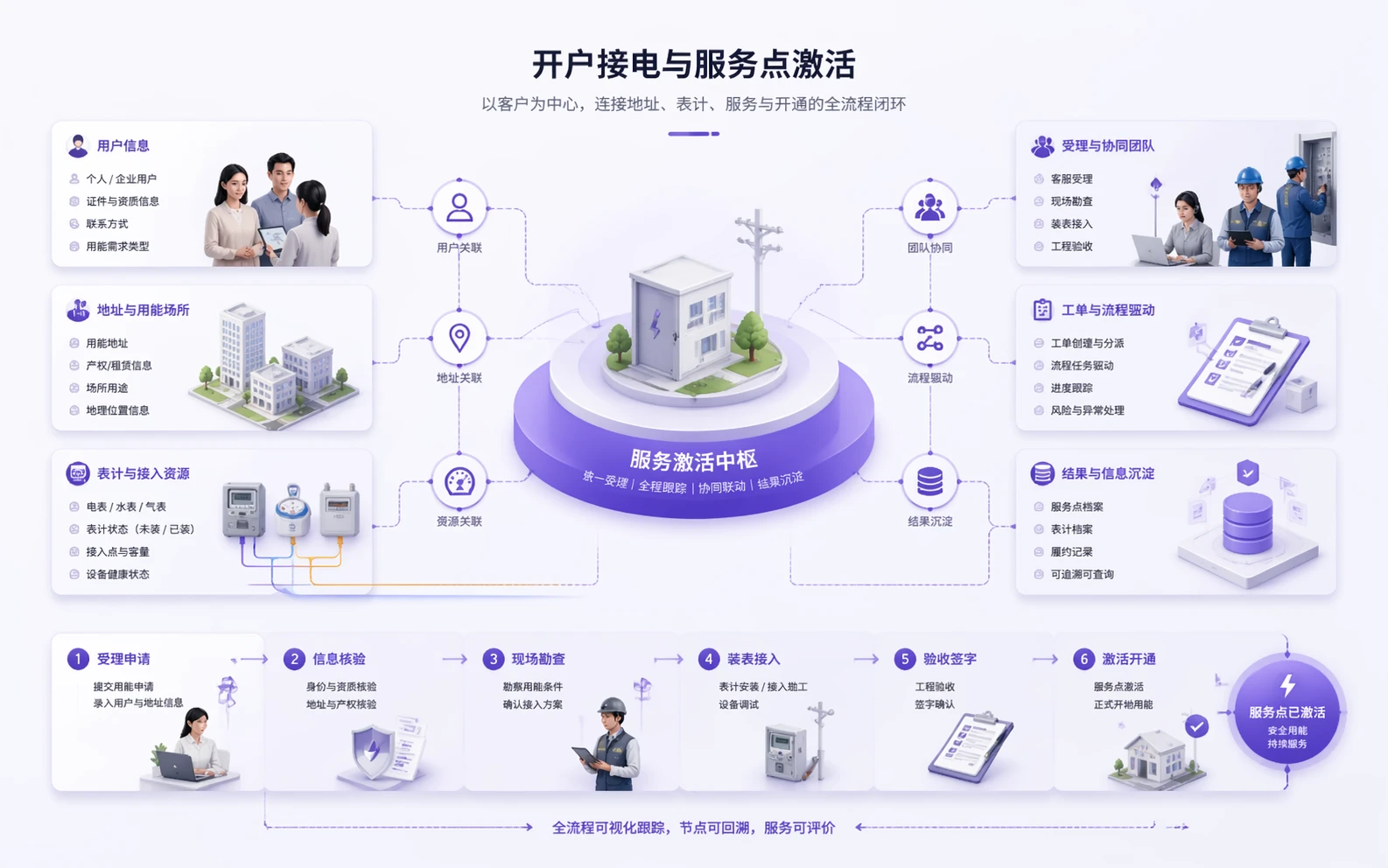
Onboarding and service-point activation
Keep subscriber onboarding, premise setup, meter installation, service-point state, and first service actions inside one chain so service and field teams move from the same context.
More continuous onboarding
Fewer activation gaps
Clearer service-point visibility
Metering, billing, and service-request coordination
Build one operating line around readings, rate plans, billing periods, exception questions, and service requests so customer issues do not bounce between metering, service, and escalation teams.
Faster service handling
Less context loss
More control over high-priority requests
Outage response and energy program operations
Keep outages, affected areas, restoration timing, public communication, and energy program follow-through on one execution chain so teams preserve accountability at high-risk moments.
Better outage coordination
Stronger restoration traceability
More continuous program execution
Why NexusClaw
Energy teams need more than a service assistant. They need an execution system for utility operations.
What determines whether this works in production is whether subscriber, premise, meter, request, outage, and restoration records can live inside one governance framework instead of separate silos.
Start with onboarding, service, and outage response instead of replacing the whole utility core at once
NexusClaw fits energy teams that need one governed path across subscriber service, service requests, and outage coordination before anything heavier.
AI supports triage, summaries, restoration notices, and risk warnings without crossing billing or restoration boundaries
The system can classify requests, summarize outage context, surface restoration timing, and recommend next steps, but it does not change tariffs, confirm restoration completion, or bypass required accountability.
Subscriber, premise, meter, service, and outage records stay on one execution chain
Every onboarding step, reading, request, outage event, restoration update, and program action can write back into the core system so service, metering, field, and operations teams move from the same facts.
See NexusClaw against a real utility service workflow
If you are evaluating how an energy or utility organization can move onboarding, metering service, outage handling, and energy programs into one governed chain, the most useful next step is a demo built around a real utility workflow.