
Starter
For a controlled pilot and first workflow
- One high-value workflow
- Core Agent and governance capabilities
- Managed SaaS assessed first
Pricing
NexusClaw pricing combines an org base fee, usage metering, and outcome-based pricing. The org base fee covers the operating foundation, usage metering reflects runtime consumption, and outcome-based pricing connects digital labor value to attributable, reviewable, and billable business results.
Commercial Scope
The website currently does not publish fixed subscription prices, annual discounts, or deployment service amounts. The profiles below help evaluate fit; commercial terms are provided after deployment boundary, operating scale, and acceptance goals are confirmed.
Starter
For a controlled pilot and first workflow
Professional
For multi-team, multi-workflow operations
Enterprise
For scaled and complex enterprise boundaries
Note: token, storage, API, model, and channel usage are confirmed during project assessment and are not unlimited-usage promises. Third-party AI models may use customer BYOK or mutually approved supplier and contract rules.
| Service | Assessment focus | Rule |
|---|---|---|
| Managed SaaS standard activation | Organization, environment, and runtime scale | Delivered against confirmed subscription and project scope |
| Hybrid cloud + customer AI PC | Model, tunnel, network, and ownership boundary | Hardware and customer cloud resources confirmed separately |
| Customer private cloud / single-host full stack | Model, data, concurrency, and infrastructure | Hardware, cloud, backup, certificates, and custom scope confirmed separately |
| Ongoing upgrade and support | Support level, response model, and upgrade window | Agreed by topology and service scope |
Paid Value Validation
The default starts with SaaS, one approved workflow, and one frozen acceptance metric, including remote kickoff, a configuration workshop, and an acceptance review. Model usage, third-party resources, connectors, data cleansing, onsite work, and custom development boundaries are confirmed during pilot preparation.
Pricing model
The model is not organized around software access. It is organized around the operating foundation, runtime consumption, and accountable outcomes required for digital labor in production.
01
Pay an org-level base fee for the operating foundation, base agent quota, governance capabilities, auditability, and support services. This layer is not priced by user count; it gives enterprises a budget baseline for deploying digital labor.
02
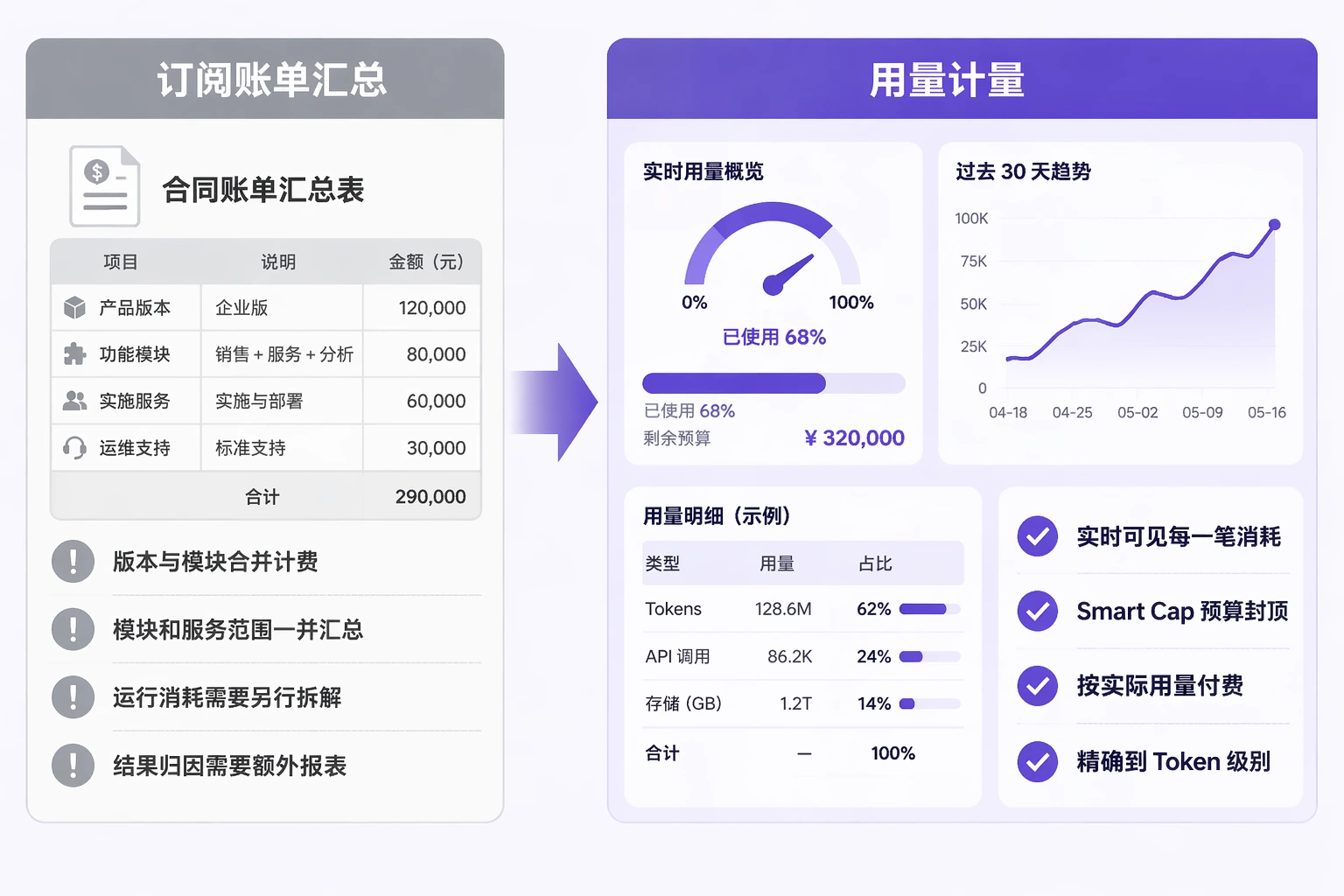
Meter runtime records such as agent executions, model calls, voice nodes, automation steps, external tool calls, and writeback actions so teams can review consumption by business workflow.
03
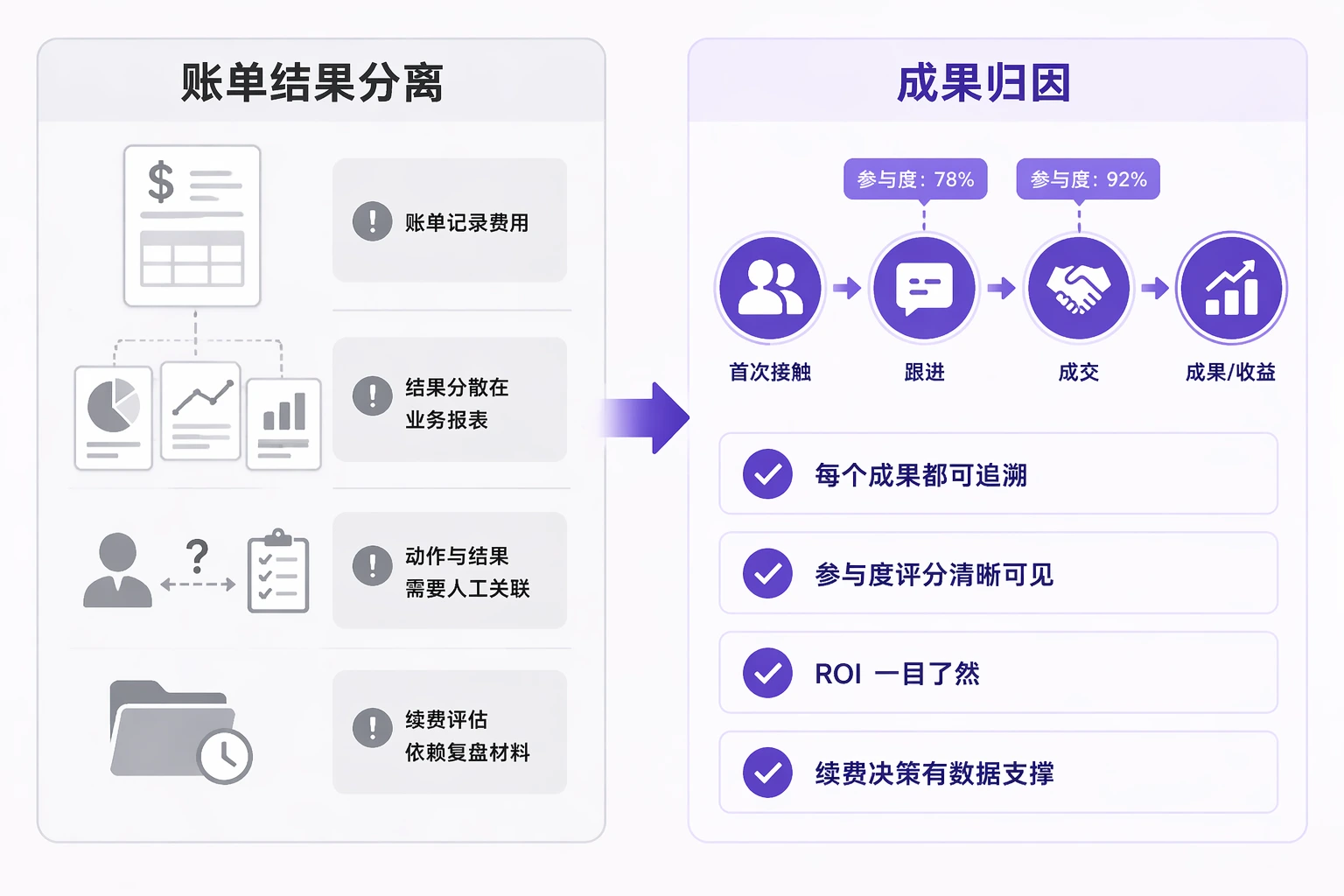
When business results can be recorded, attributed, and reviewed, enterprises can connect part of the fee to agreed outcome events. The model tracks outcome type, attribution method, contribution score, pricing tier, billing status, and dispute review.
Model views
These visuals are designed for the website, customer meetings, and internal sharing. They explain how NexusClaw separates the base fee, runtime consumption, and outcome settlement into a business model.
Runtime consumption is captured through traceable actions so cost can be reviewed by agent execution, model call, voice node, and system writeback.
Outcome events, attribution evidence, settlement status, and dispute review sit in one chain so business results become reviewable and billable.
Settlement logic
NexusClaw does not describe outcomes as a generic value claim. It breaks settlement into events, evidence, contribution, tiers, and review records.
Define which business events qualify for the outcome model, such as qualified lead progression, service request completion, renewal action, or workflow milestone.
Record what context the agent read, which actions it triggered, whether people stepped in, and how the result was written back.
Use contribution score, pricing tier, billing status, and dispute handling to create a review chain for commercial discussions.
Commercial rollout
A mature pricing discussion starts with one business workflow where boundaries, actions, and results can be recorded and reviewed.
Confirm deployment environment, business objects, permission boundaries, audit requirements, and base agent quota.
Confirm how agent executions, model calls, voice nodes, automation steps, tool calls, and writeback actions are recorded.
Define which business results qualify for outcome-based pricing, with attribution method, contribution score, and pricing tier.
Review usage, outcome events, dispute records, and the next workflow expansion scope on a monthly or quarterly basis.
If your team is evaluating how agents enter real business workflows, NexusClaw can begin with one org, one workflow, and a defined set of reviewable outcome events.
We do not publish a context-free unit price table. Pricing discussions are based on deployment scope, runtime consumption, and outcome events.