
01
Industry Use Case
Bring governed digital labor intothe China market access workflow
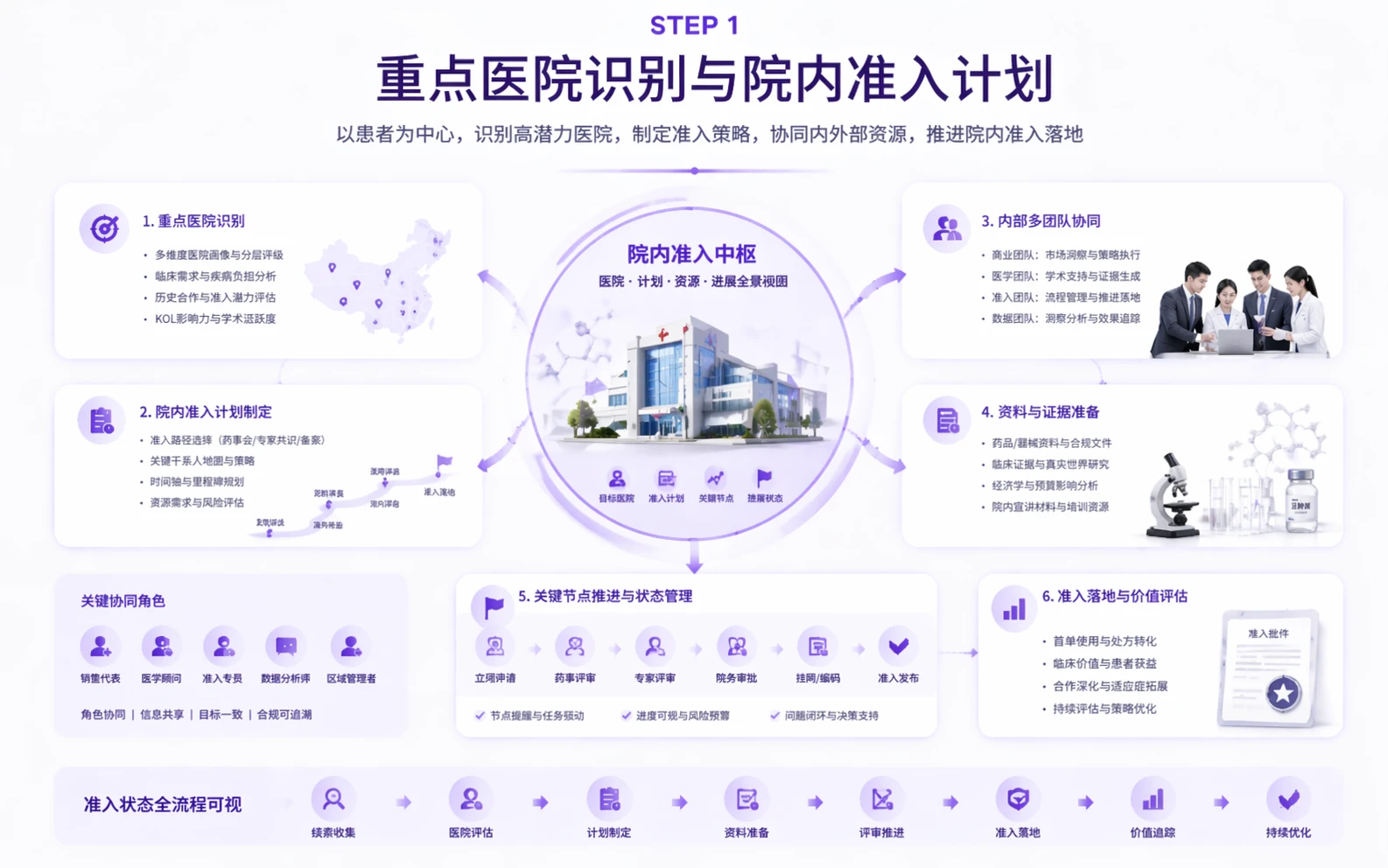
Bring hospital access, academic interaction, medical information requests, dual-channel fallback, and risk escalation into one life sciences operating chain.
Built for China-focused innovative pharma and biotech commercialization teams across RAM, KAM, MSL, and medical information workflows.
Hospital accessMedical information requestsDual-channel routing
Industry pressure
Life sciences teams are rarely missing business applications. They are blocked when access, medical, and compliance work do not share one execution chain.
Target account planning, hospital access, academic engagement, medical response, dual-channel routing, and risk escalation all sit on one operating line. If context cannot move across roles, agents never enter live execution.
02
Medical information requests raised during academic engagement need controlled triage, drafting, approval, and external response, yet many teams still pass context by hand.
03
When hospital access stalls, dual-channel fallback is needed, or AE, complaint, and compliance signals appear, escalation boundaries and auditability must stay explicit.
Core scenarios
Life sciences teams can start with these three China-market access workflows
This page is not a generic global SFE template. It is organized around the clearest China-market commercialization path: hospital access, academic engagement, medical response, then dual-channel fallback and risk escalation.
Target account planning and hospital access
Use Account, Contact, and Hospital Access Plan to manage target hospitals, stakeholders, material readiness, barriers, and review stages inside one execution chain.
More continuous access progression
Less fragmentation of materials and status
Clearer prioritization of key hospitals
Academic interaction and medical information response
Keep Academic Interaction, meeting summaries, Med Info Request triage, drafting, approval, and external response inside one system instead of moving context through email and handoff.
Faster medical response
Clearer next steps after engagement
Traceable approval and response boundaries
Dual-channel fallback and risk escalation
When hospital access stalls, route to dual-channel or DTP support; when AE, complaint, or compliance issues appear, move escalation, ownership, and records into one governed loop.
Clearer fallback paths
Fewer missed high-risk events
Stronger auditability and accountability
Why NexusClaw
Life sciences teams do not need more fragmented tools. They need an execution system that carries access, medical, and compliance work together.
What determines whether this works in production is not whether there is an AI assistant. It is whether Hospital Access Plan, Academic Interaction, Med Info Request, Opportunity, and risk events can live inside one governed system.
Start with hospital access and medical response instead of a heavyweight industry platform
NexusClaw uses Lead, Account, Contact, Opportunity, and Case as the base, then adds only Hospital Access Plan, Academic Interaction, and Med Info Request to cover the highest-value China-market workflow.
AI supports briefing, summarization, triage, and routing without crossing approval or response boundaries
The system can handle hospital segmentation, pre-meeting briefs, post-meeting summaries, medical request triage, dual-channel recommendations, and compliance warnings, but it does not auto-approve outbound content, close risk events, or replace required human confirmation.
Commercial, medical, access, and compliance work stay on one record chain
Every academic interaction, information request, stage change, dual-channel route, and escalation can keep an owner, timestamp, and audit trail so teams move from the same facts.
See NexusClaw against a real life sciences access workflow
If you are evaluating how a China-market life sciences team can move hospital access, academic engagement, medical response, dual-channel fallback, and risk escalation into one governed chain, the most useful next step is a demo built around a real target-account workflow.