
GRC | Evidence Loop
Compliance is not a list of regulation names in a footer. Requirements become executable controls, with every run tied to a version, owner, and evidence.
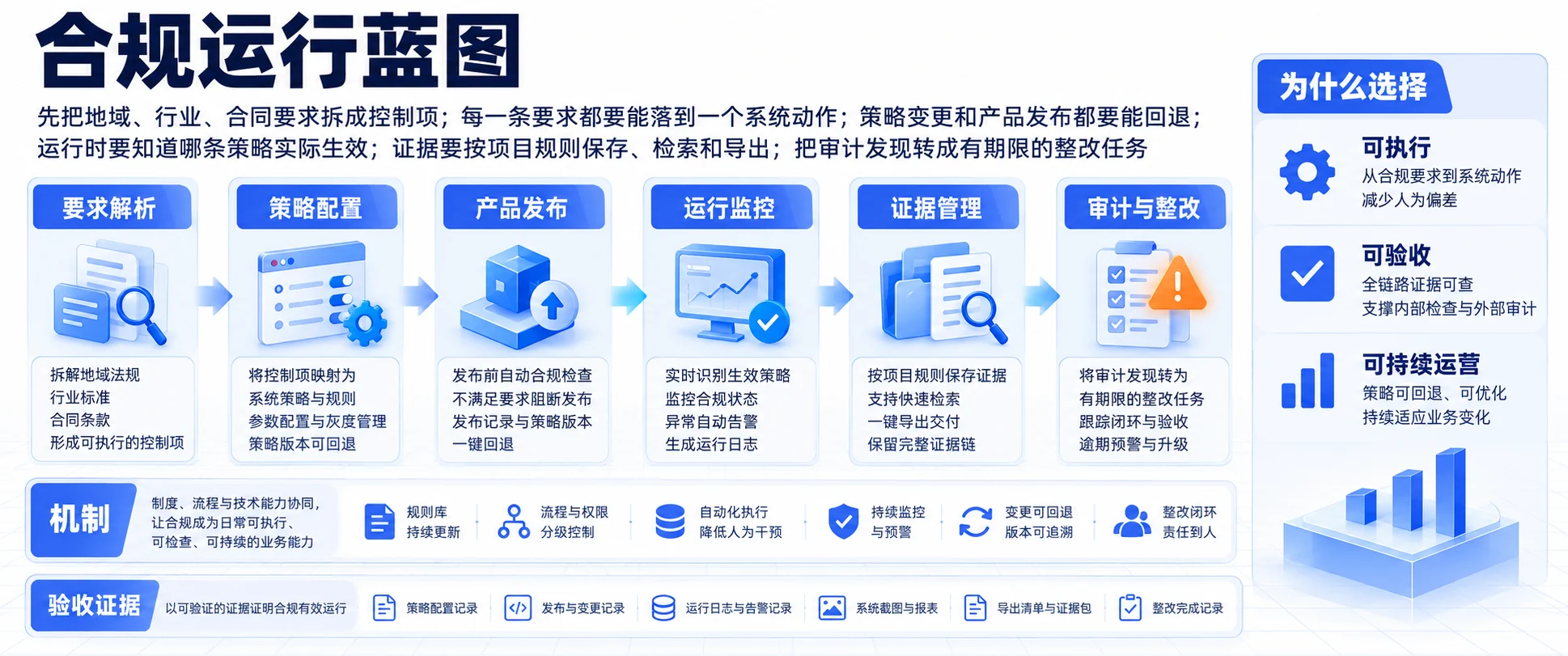
Obligation inventory
Turn regional, industry, and contract requirements into controls
Build a control catalog from data classes, workflows, and deployment boundaries instead of treating compliance as one untestable label.
Execution steps
- 01
Collect laws, contracts, and procurement clauses
- 02
Mark region, system, and workflow scope
- 03
Break into observable control actions
- 04
Assign owner and review cadence

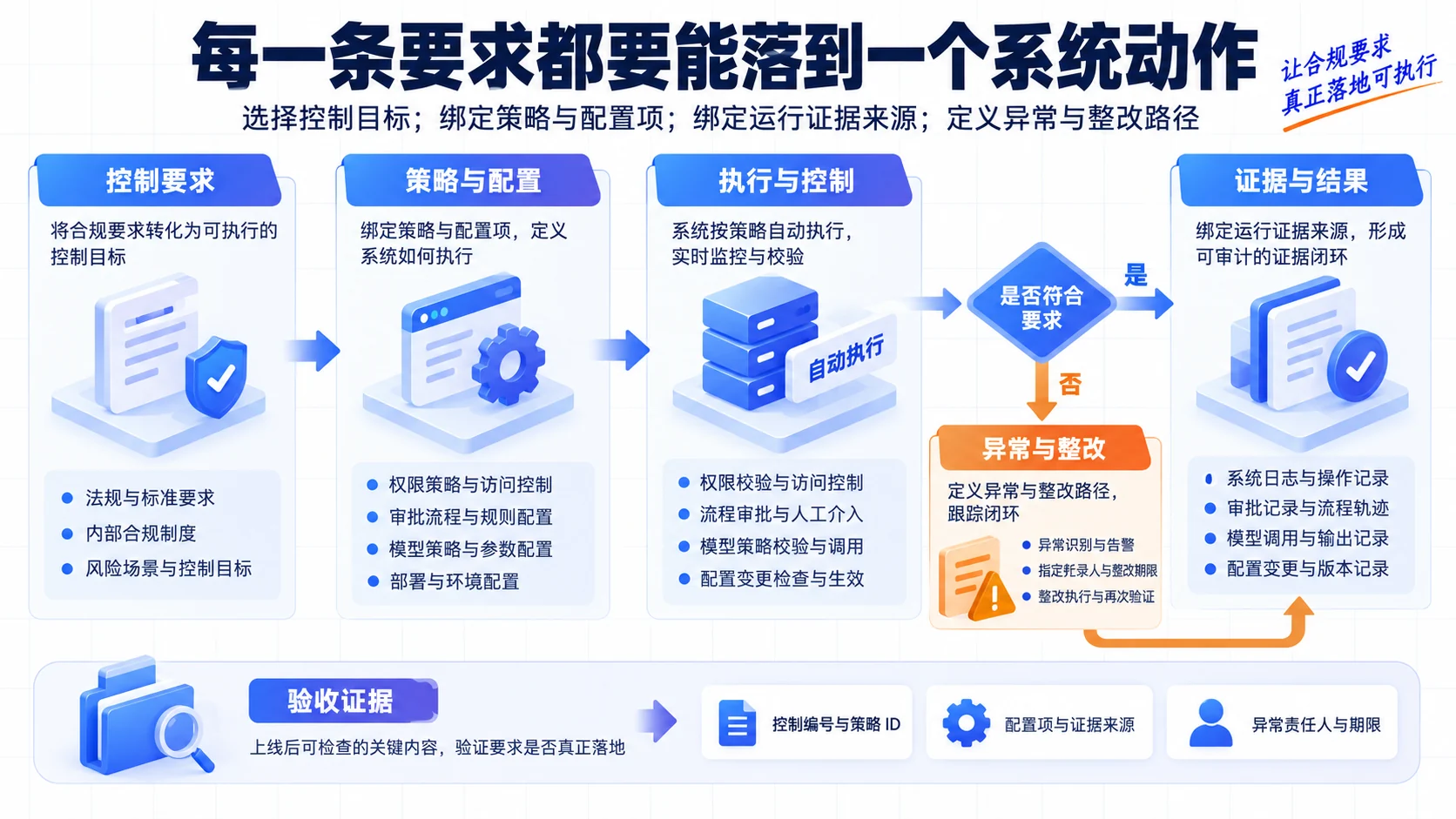
Control mapping
Map every requirement to a system action
Connect controls to permissions, approvals, retention, model, and deployment settings in a requirement-to-policy-to-evidence map.
Execution steps
- 01
Select control objective
- 02
Bind policy and configuration
- 03
Bind runtime evidence source
- 04
Define exception and remediation path
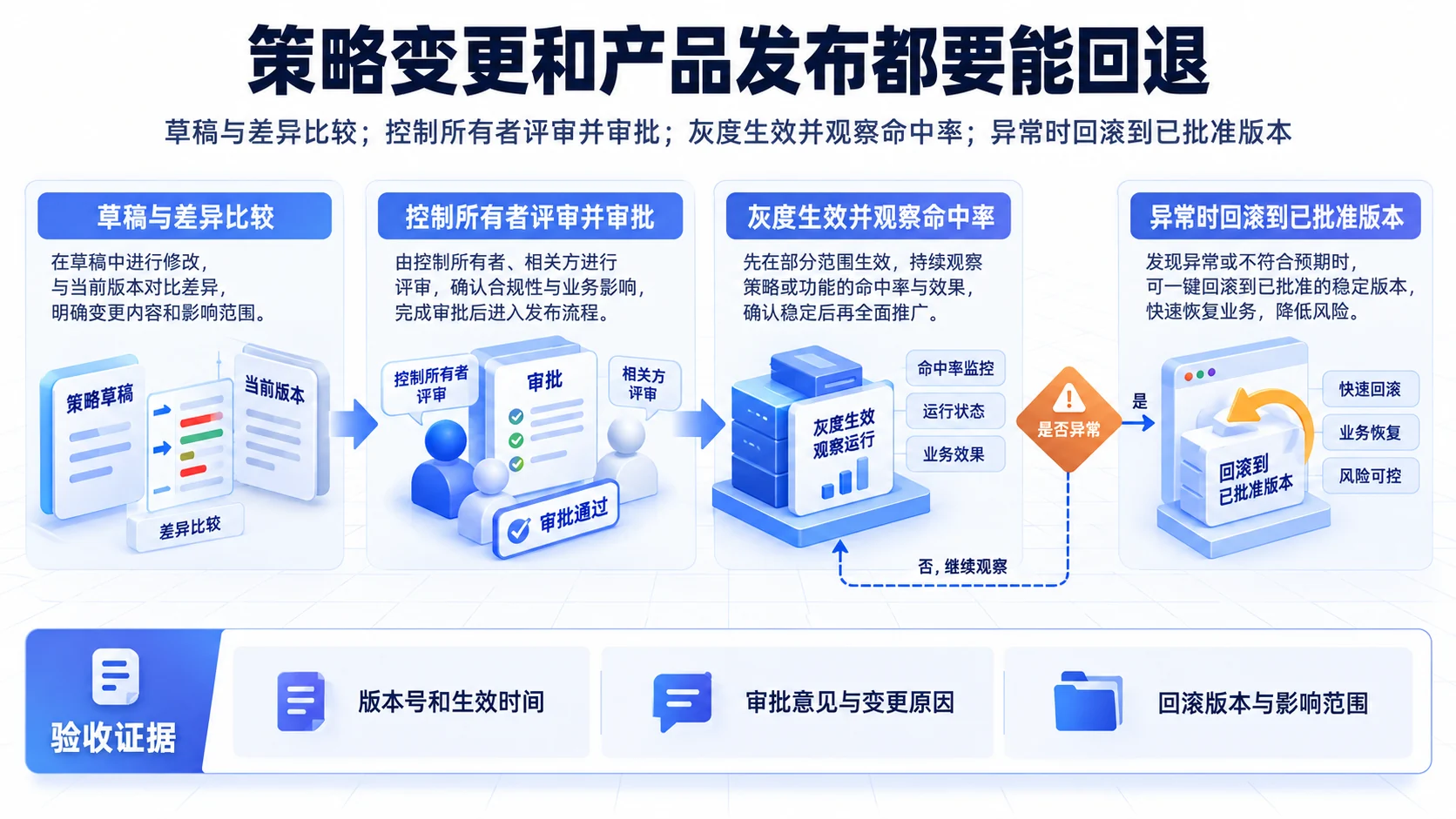
Versioned release
Make policy and product changes reversible
Policies are not static documents; they move through draft, review, approval, activation, observation, and rollback states.
Execution steps
- 01
Draft and compare differences
- 02
Owner reviews and approves
- 03
Roll out gradually and observe matches
- 04
Rollback to an approved version
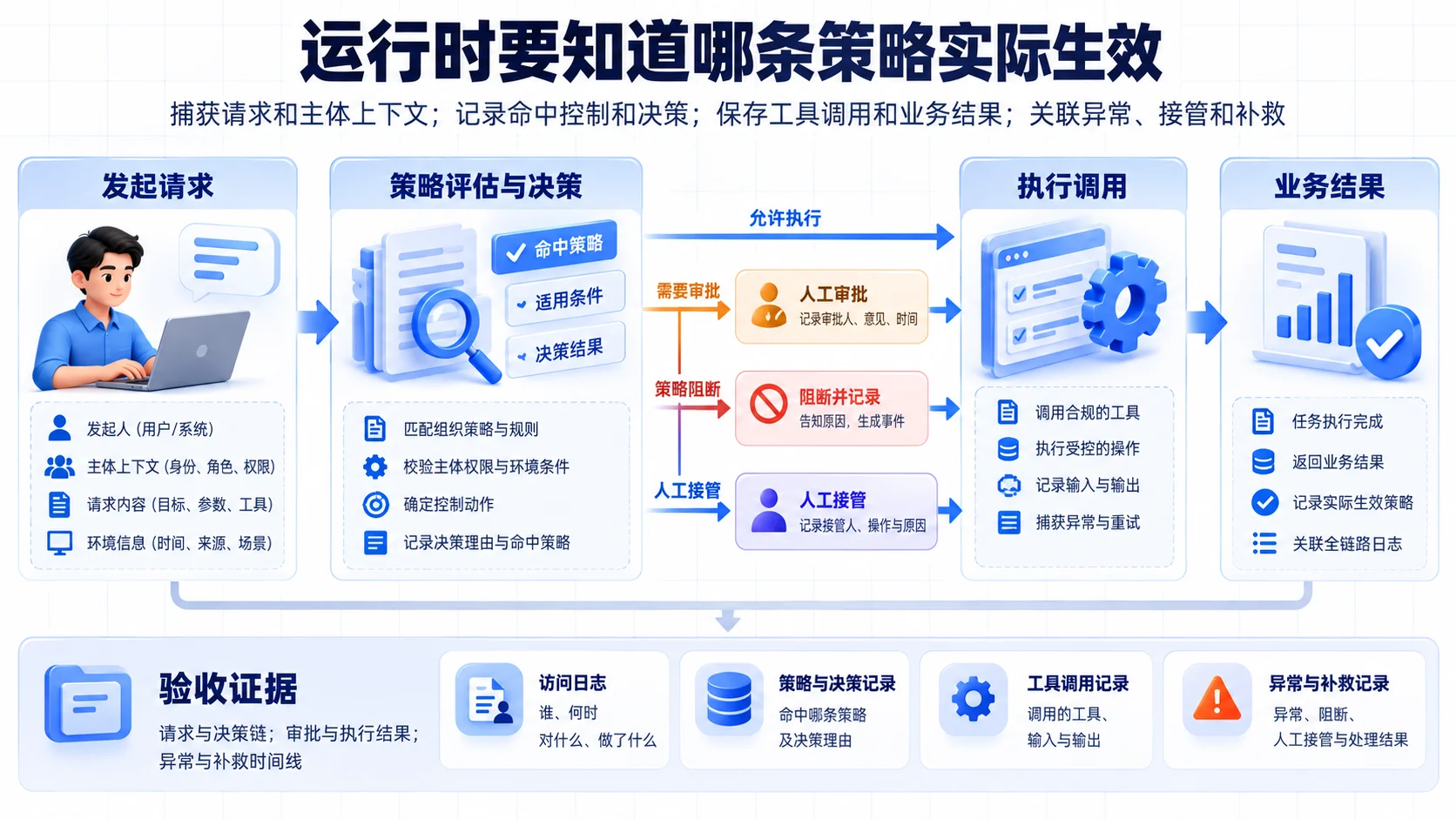
Runtime evidence
Know which policy actually ran at runtime
Record access, calls, approval, blocks, handoffs, and outcomes so evidence answers who, when, what, and which action.
Execution steps
- 01
Capture request and actor context
- 02
Record matched control and decision
- 03
Keep tool call and business result
- 04
Link exception, handoff, and remediation
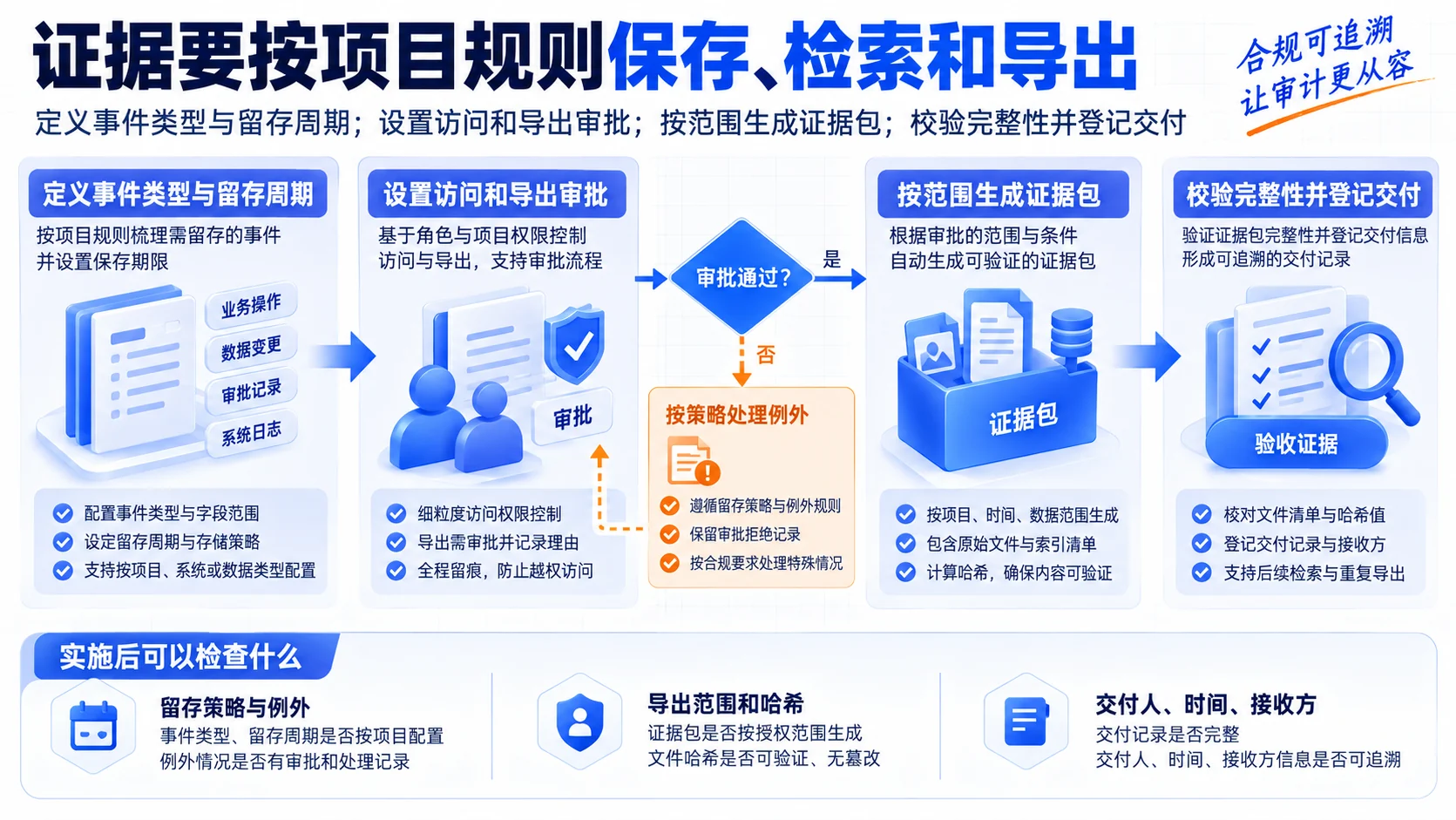
Retention and export
Retain, retrieve, and export evidence by project rule
Configure retention, access, legal hold, redaction, and export scope so audit packages are not assembled at the last minute.
Execution steps
- 01
Define event types and retention
- 02
Set access and export approval
- 03
Generate package by scope
- 04
Verify integrity and record delivery
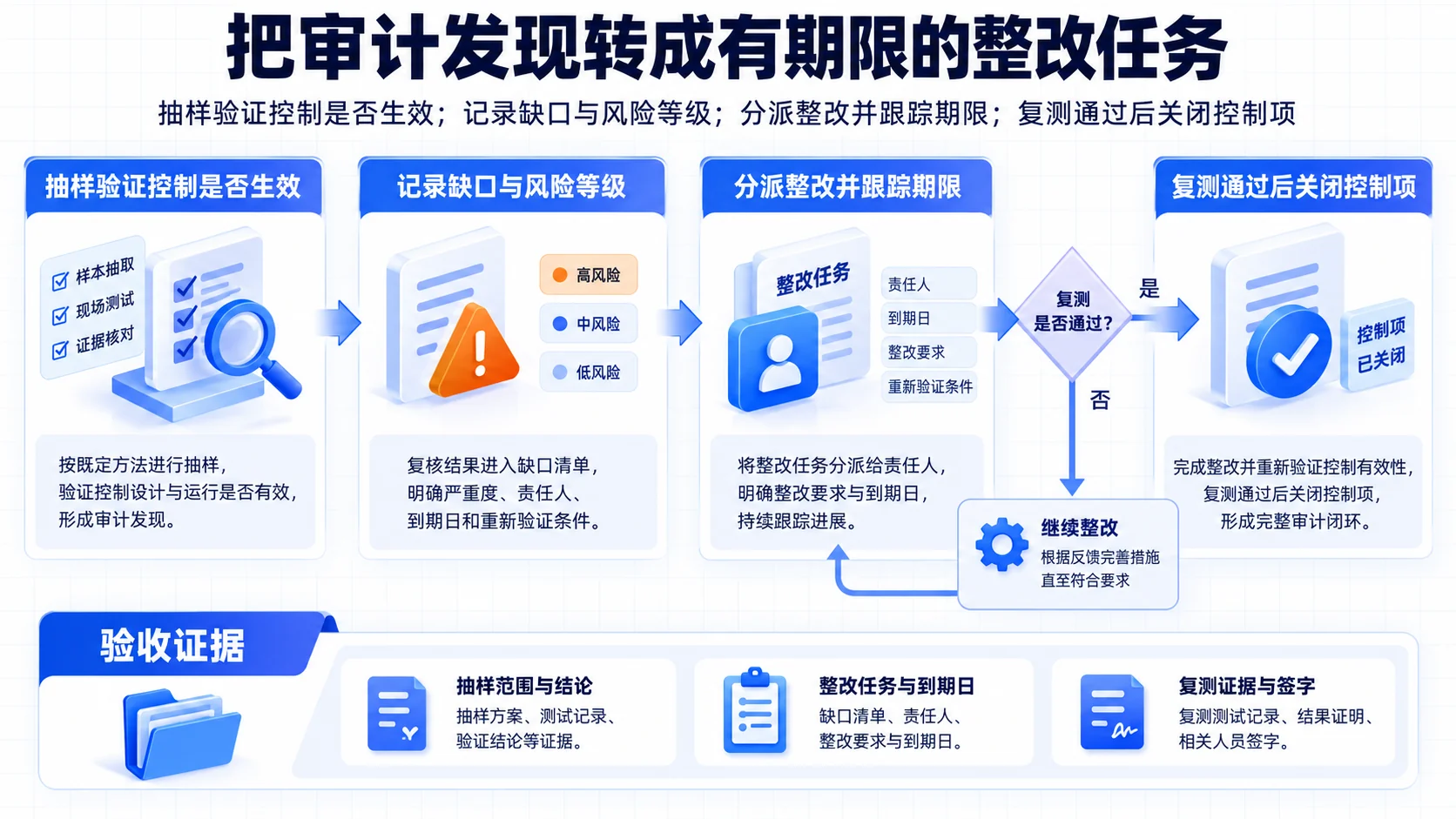
Review and remediation
Turn audit findings into time-bound remediation
Feed review results into a gap list with severity, owner, due date, and revalidation criteria before closure.
Execution steps
- 01
Sample and verify control
- 02
Record gap and risk level
- 03
Assign remediation and due date
- 04
Close after re-test passes
Bring Compliance requirements into a real evaluation
We map the principle to an acceptance checklist for your data, workflow, deployment boundary, and owners.
Region, data, model, operations, and acceptance requirements still need to be confirmed item by item in the project assessment.