
01
Industry Use Case
Bring governed digital labor intothe nonprofit donor and program workflow
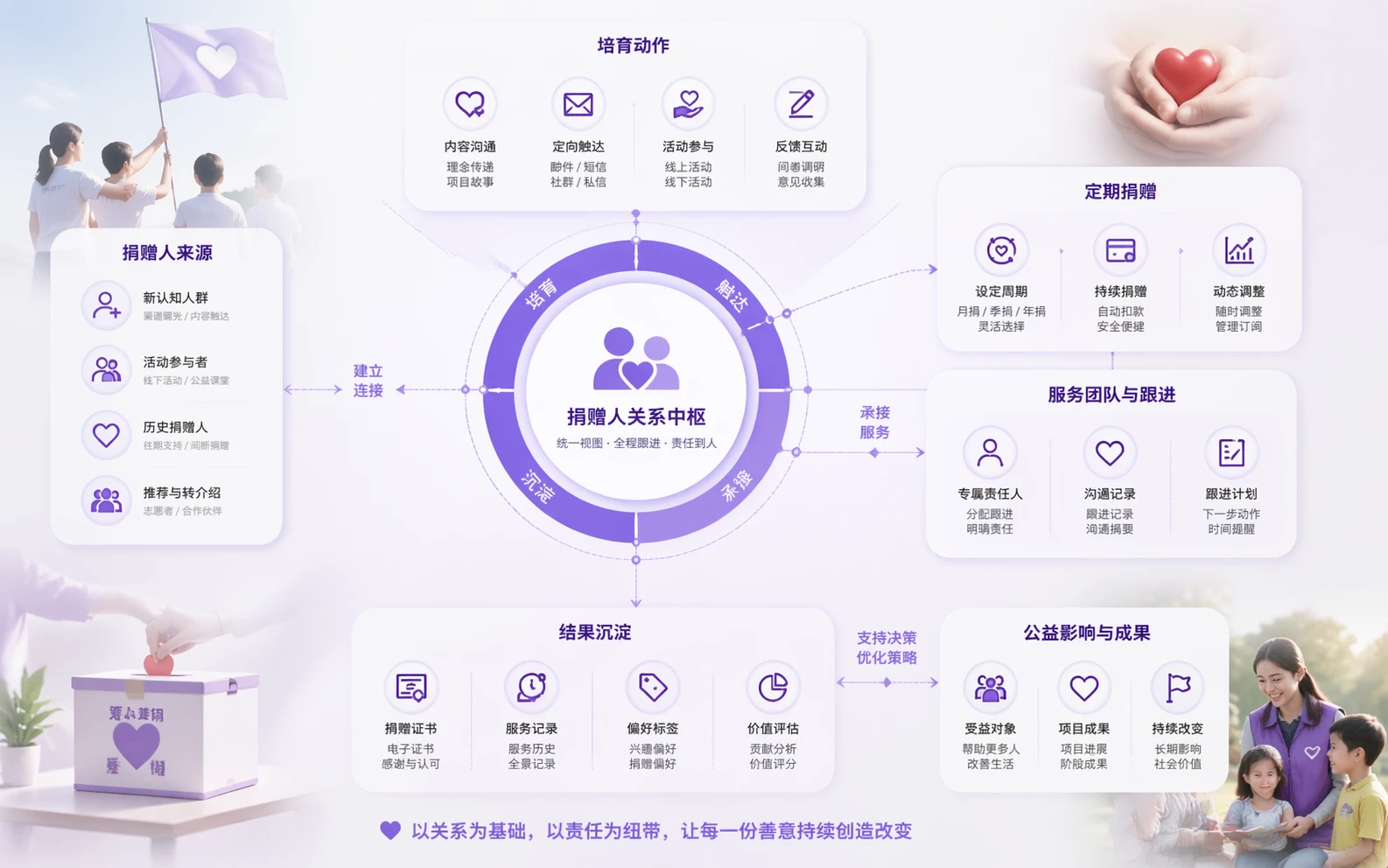
Bring donor identification, cultivation, asks, donations, stewardship, program execution, impact follow-through, and volunteer management into one nonprofit operating chain.
Built for foundations, charitable organizations, and nonprofit teams coordinating fundraising, programs, allocations, and volunteers.
Donor cultivationFund allocationVolunteer management
Industry pressure
Nonprofit teams are rarely missing business applications. They are blocked when donor, program, and volunteer work do not live on one operating chain.
From donor identification and recurring giving to allocation, program delivery, and impact reporting, nonprofit teams need one system that keeps donors and outcomes together.
02
When program execution, grants, fund allocation, and impact feedback do not live on one record chain, it becomes hard to explain where funds went and what outcomes they created.
03
Volunteer roles, shifts, hours, and program participation still depend heavily on manual coordination, which increases overhead and reduces transparency.
Core scenarios
Nonprofit teams can start with these three operating workflows
This page is not a full accounting replacement. It is organized around the clearest production path: donor cultivation, fund and program execution, then volunteer coordination and impact follow-through.
Donor cultivation and recurring giving
Keep donor profiles, communication records, asks, donation opportunities, and recurring-giving status on one relationship chain so fundraising teams can manage donor motion continuously.
More continuous stewardship
Fewer missed follow-ups
Better visibility into recurring giving
Program execution, grants, and fund allocation
Build one governed path around programs, grants, donation allocations, and program engagement so the organization can explain where funds went, how work progressed, and how outcomes returned.
Better execution transparency
Stronger fund traceability
Better program reviews
Volunteer roles, shifts, and impact follow-through
Keep volunteer roles, shifts, service hours, feedback, and program outcomes on one chain so volunteer coordination no longer depends on temporary spreadsheets.
Better volunteer coordination
Fewer scheduling gaps
Stronger impact records
Why NexusClaw
Nonprofit teams need more than a contact database. They need an execution system for donor and program work.
What determines whether this works in production is whether donor, donation, allocation, program, and volunteer records can live inside one governance framework.
Start with the donor, program, and volunteer chain instead of replacing the entire nonprofit stack at once
NexusClaw fits nonprofit teams that need one governed path across donor stewardship, fund allocation, program delivery, and volunteer coordination before anything heavier.
AI supports donor summaries, next-step guidance, reminders, and impact drafts without crossing fund-allocation boundaries
The system can summarize donor relationships, suggest the next outreach, remind recurring giving, organize program outcomes, and draft impact narratives, but it does not commit fund use, change allocations, or replace required compliance review.
Donor, donation, program, volunteer, and outcome records stay on one execution chain
Every outreach, donation, allocation, engagement, volunteer action, and outcome update can write back into the core system so fundraising, program, and operations teams keep working from the same facts.
See NexusClaw against a real nonprofit operating workflow
If you are evaluating how a nonprofit organization can move donor cultivation, fund allocation, program execution, and volunteer coordination into one governed chain, the most useful next step is a demo built around a real nonprofit workflow.