
ABAC | Attribute Boundaries
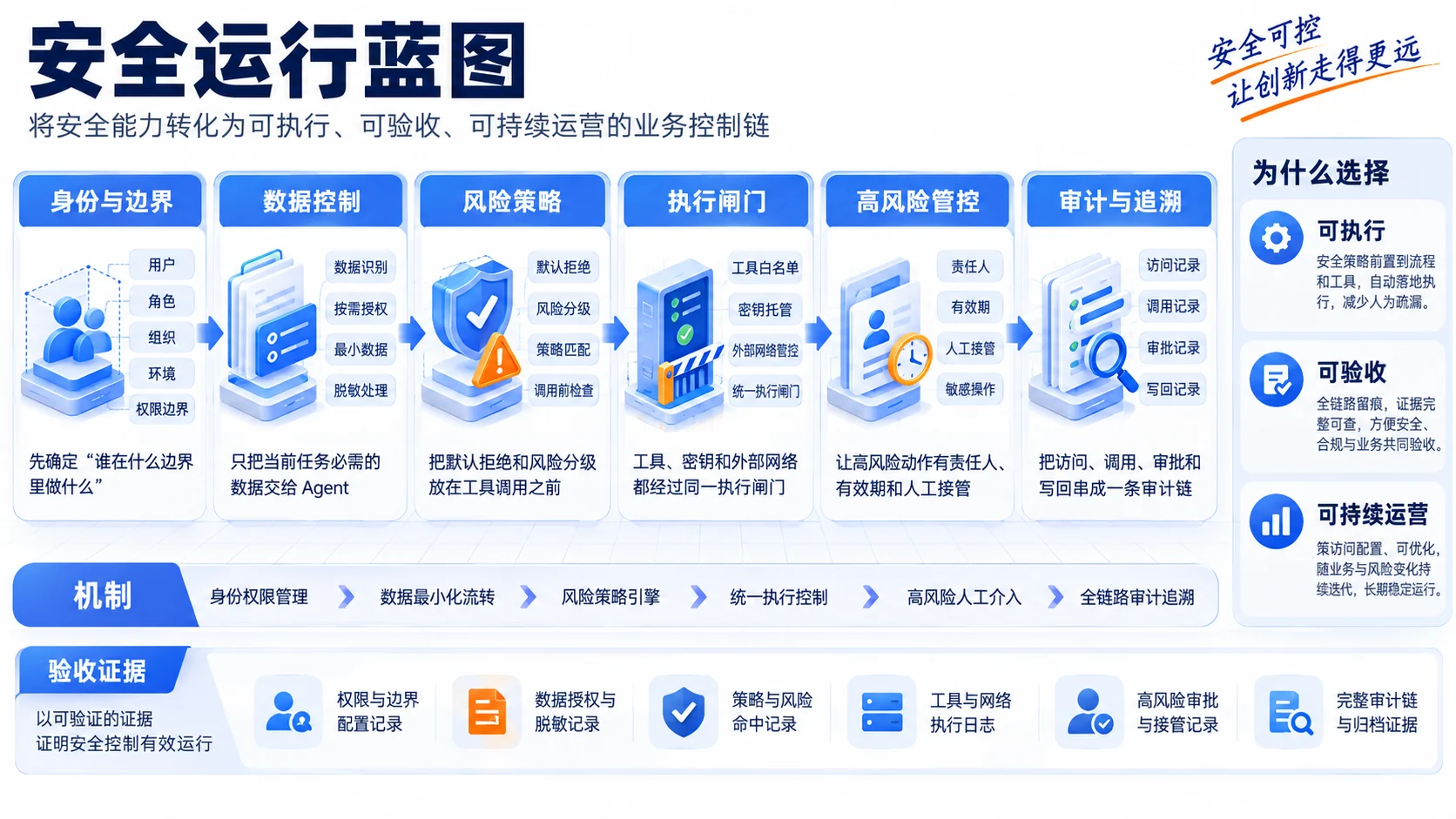
Security is not a prompt asking a model to be careful. Before context enters, a tool runs, or a record is written, the system validates actor, tenant, object, action, and risk.
Boundary model
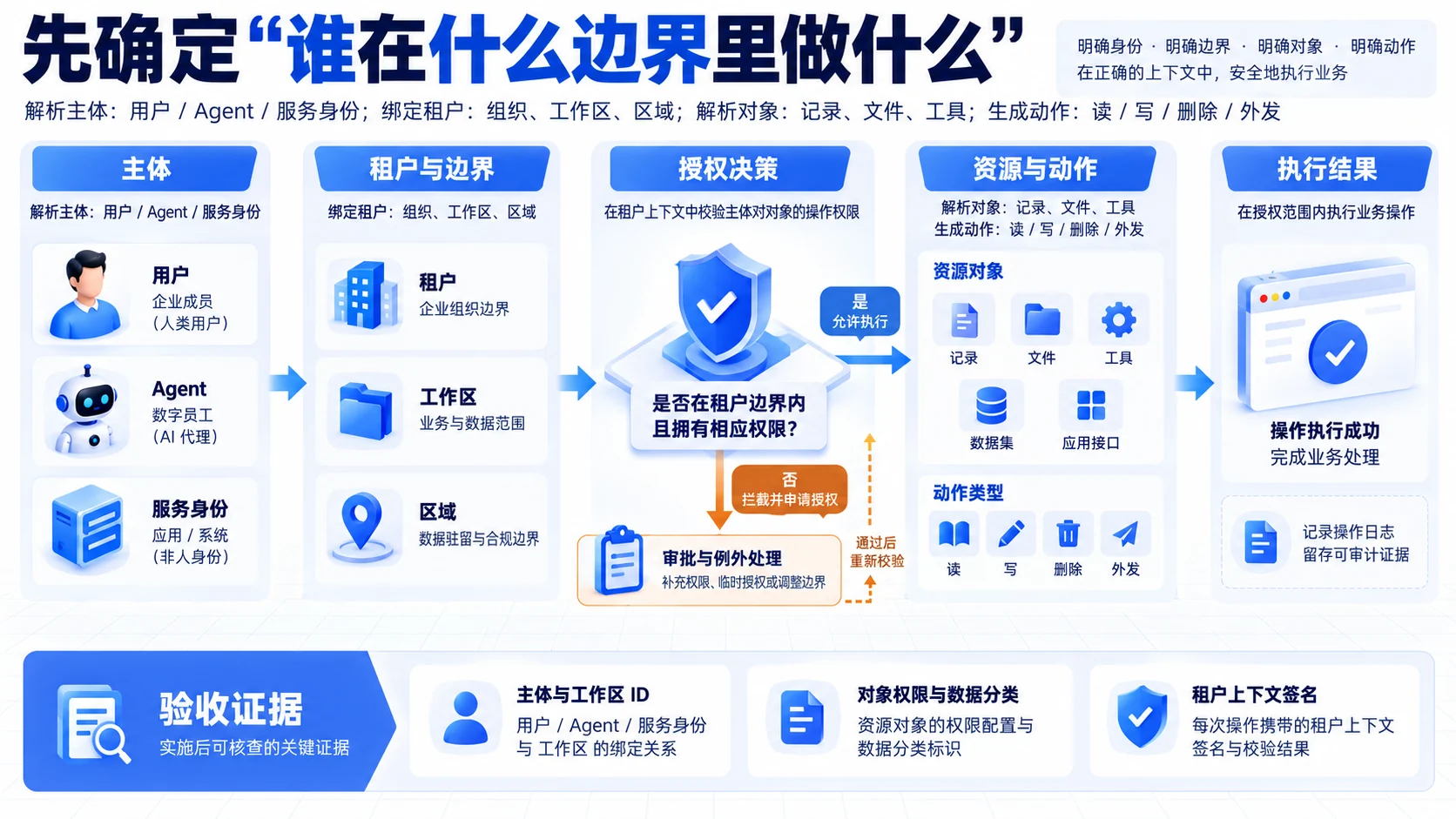
Start with who does what inside which boundary
Bind users, digital employees, service identities, tenants, workspaces, and resource objects in one authorization graph; no tenant context means no execution.
Execution steps
- 01
Resolve subject: user / Agent / service identity
- 02
Bind tenant: org, workspace, region
- 03
Resolve object: record, file, tool
- 04
Generate action: read / write / delete / egress
Context filtering
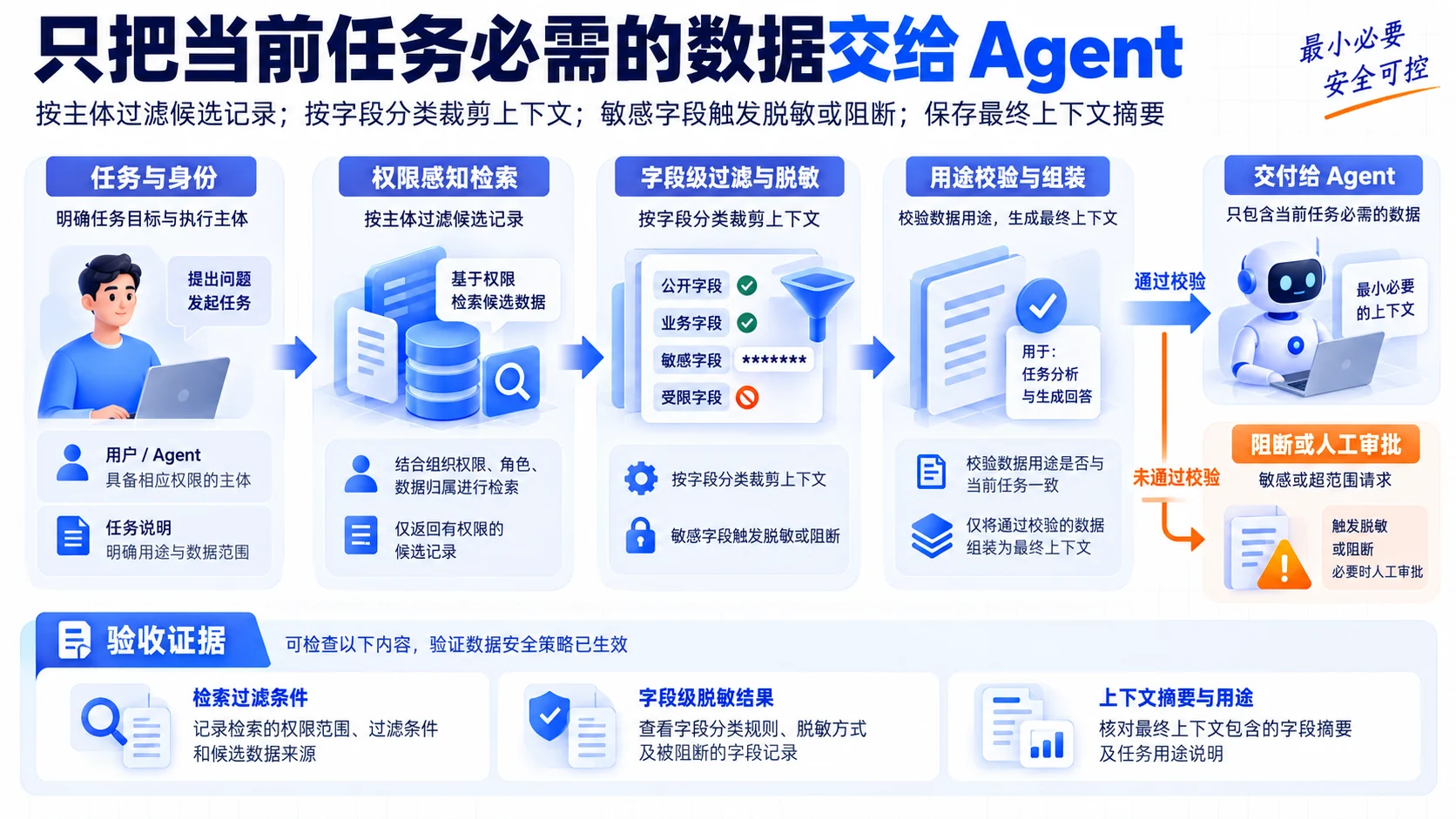
Give an Agent only the context the task needs
Run permission-aware retrieval, then field filtering, redaction, and purpose checks; discoverable does not mean context-eligible.
Execution steps
- 01
Filter candidates by actor
- 02
Trim context by field class
- 03
Redact or block sensitive fields
- 04
Store the final context summary
Risk decision
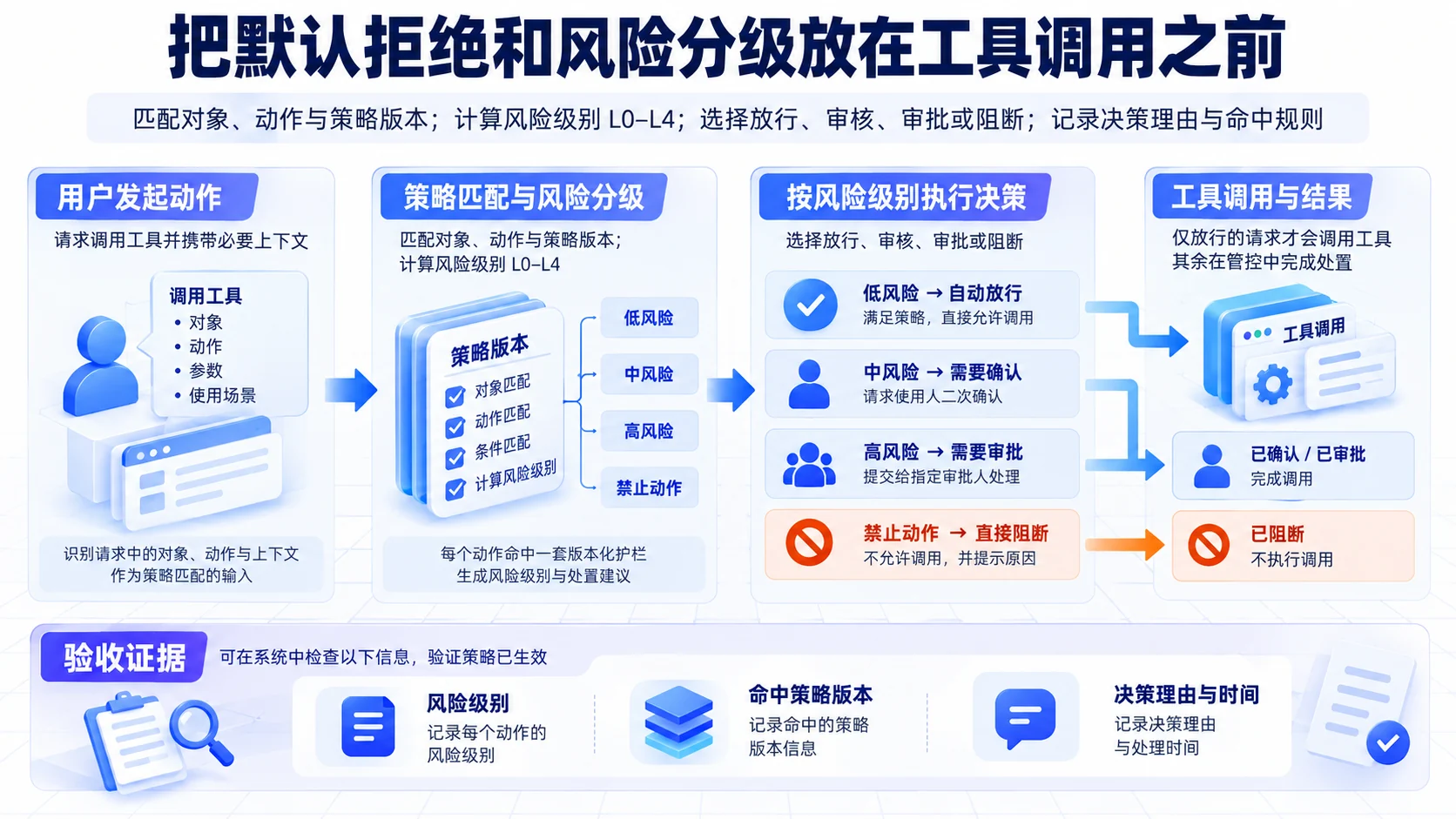
Put deny-by-default and risk tiers before tool calls
Every action matches a versioned guardrail: low-risk may pass, medium-risk asks for confirmation, high-risk needs approval, prohibited actions block.
Execution steps
- 01
Match object, action, and policy version
- 02
Compute risk level L0–L4
- 03
Choose allow, review, approval, or block
- 04
Record decision reason and rule
Controlled execution
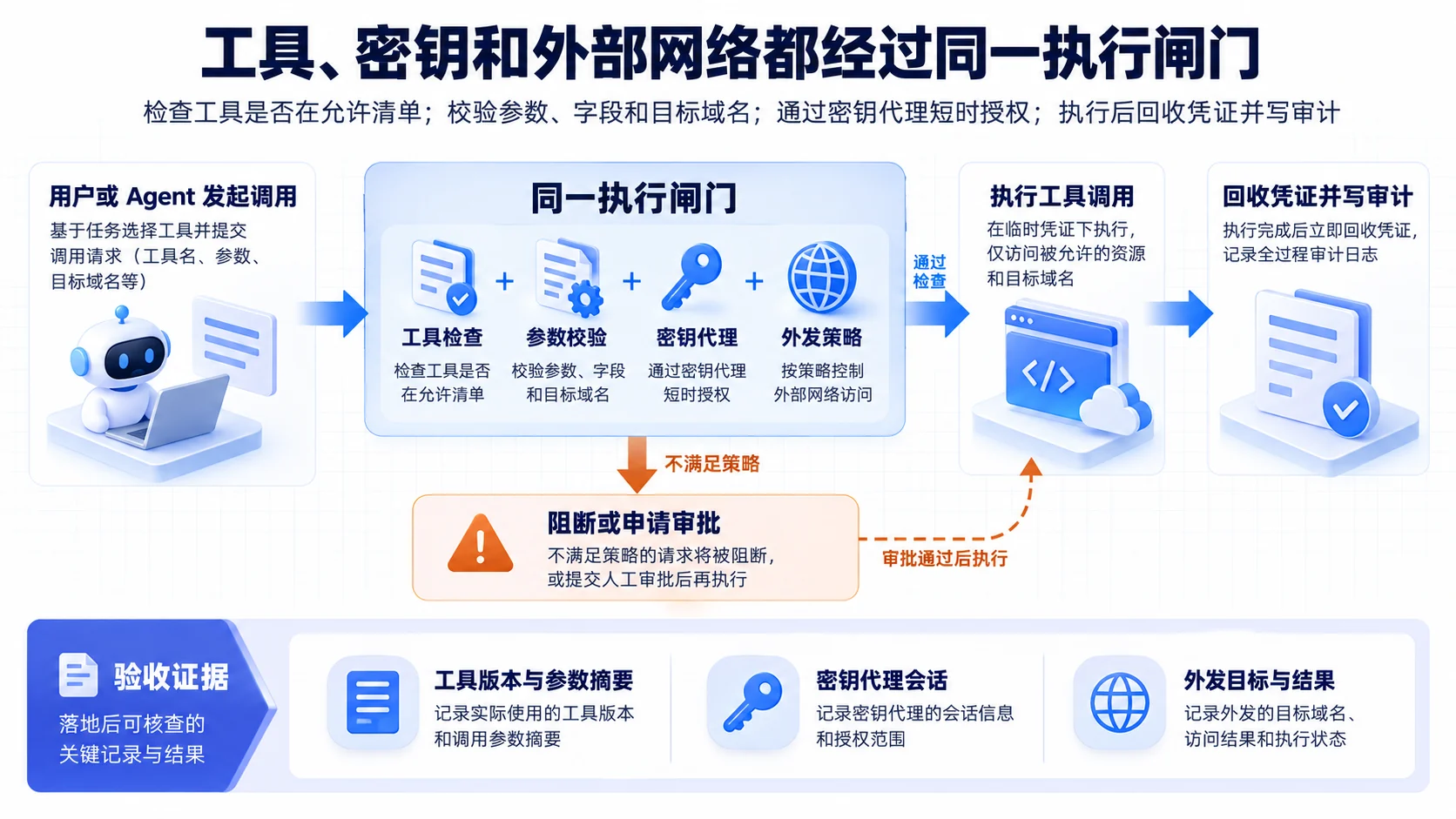
Route tools, secrets, and egress through one execution gate
An Agent does not hold long-lived secrets; tool registration, parameter validation, secret brokering, and egress policy decide each call.
Execution steps
- 01
Check tool allowlist
- 02
Validate args, fields, and destination
- 03
Issue short-lived access via broker
- 04
Revoke credential and audit
Approval and exception
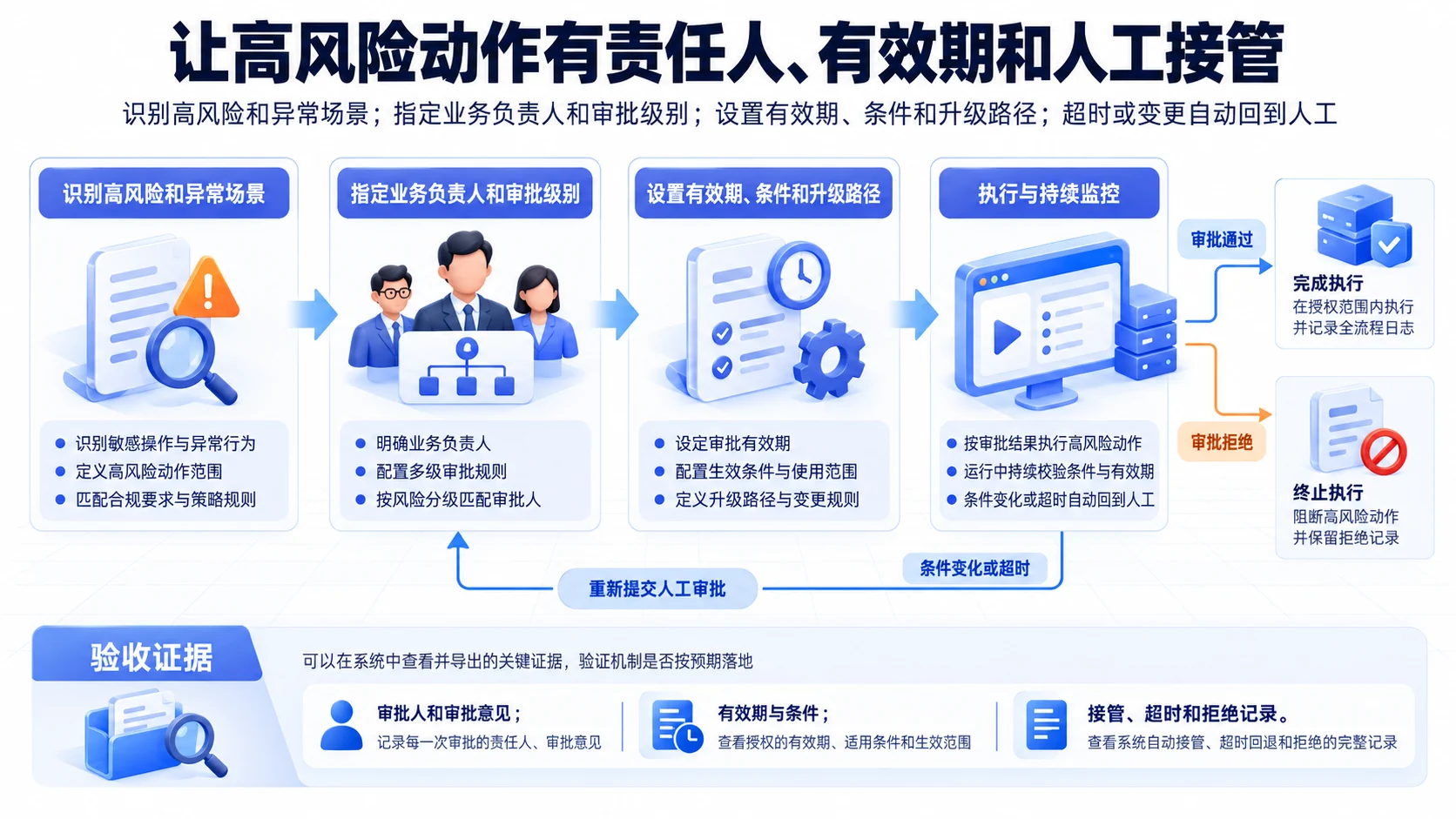
Give high-risk work an owner, expiry, and human handoff
Approval is not a popup; it is an accountable chain: who approved what, for how long, and when a changed condition requires reapproval.
Execution steps
- 01
Identify high-risk and exception cases
- 02
Assign owner and approval level
- 03
Set expiry, conditions, and escalation
- 04
Return to human on timeout or change
Evidence review
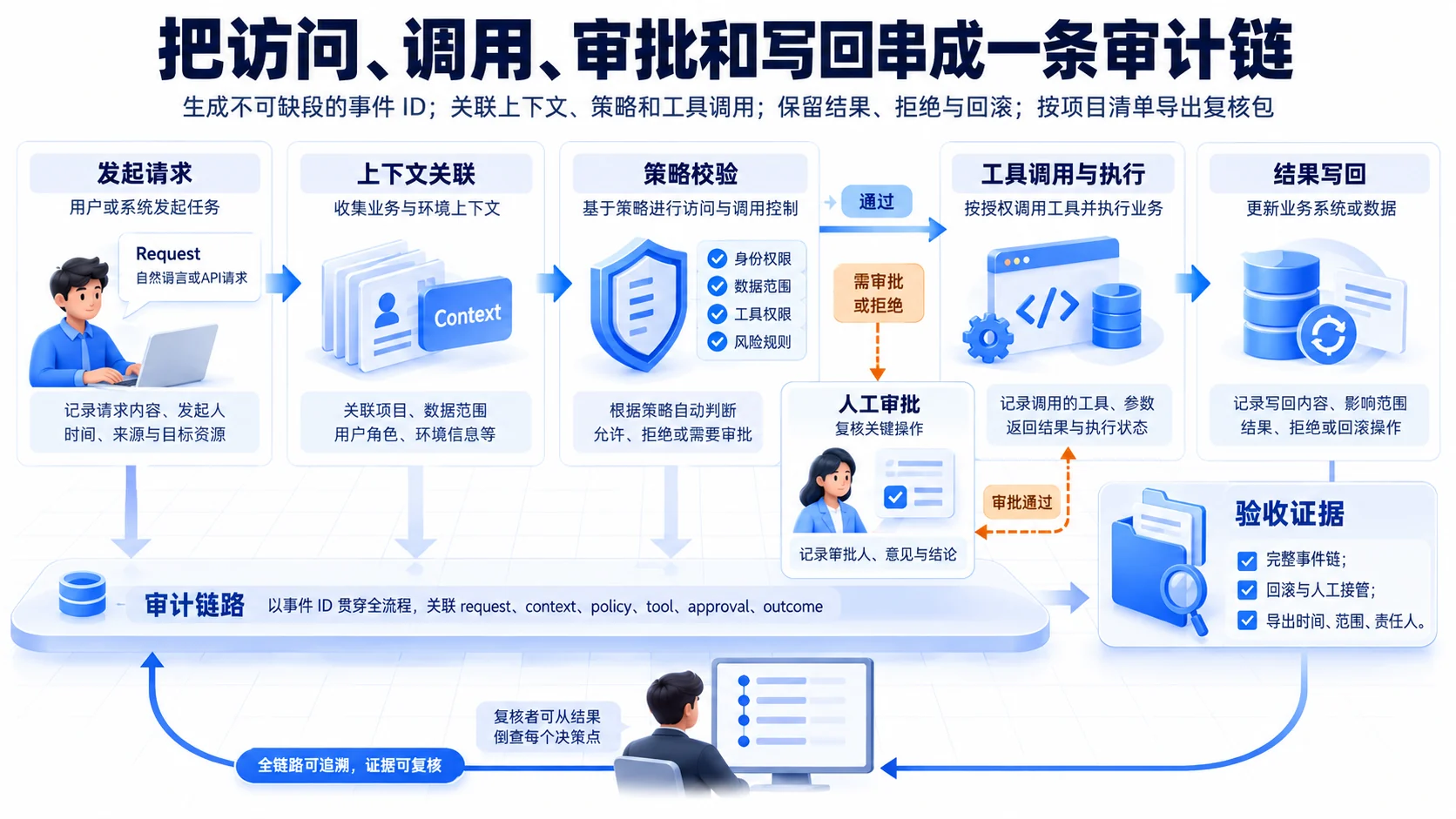
Join access, calls, approvals, and writes into one audit chain
Correlate request, context, policy, tool, approval, and outcome events so a reviewer can trace every decision from the result backward.
Execution steps
- 01
Generate a correlated event ID
- 02
Link context, policy, and tool calls
- 03
Keep outcomes, blocks, and rollback
- 04
Export a review package by checklist
Bring Security requirements into a real evaluation
We map the principle to an acceptance checklist for your data, workflow, deployment boundary, and owners.
Region, data, model, operations, and acceptance requirements still need to be confirmed item by item in the project assessment.