
PbD | Privacy by Design
Privacy should answer where data came from, why it is used, which model receives it, who can access it, how long it is kept, and when it must be deleted or blocked.
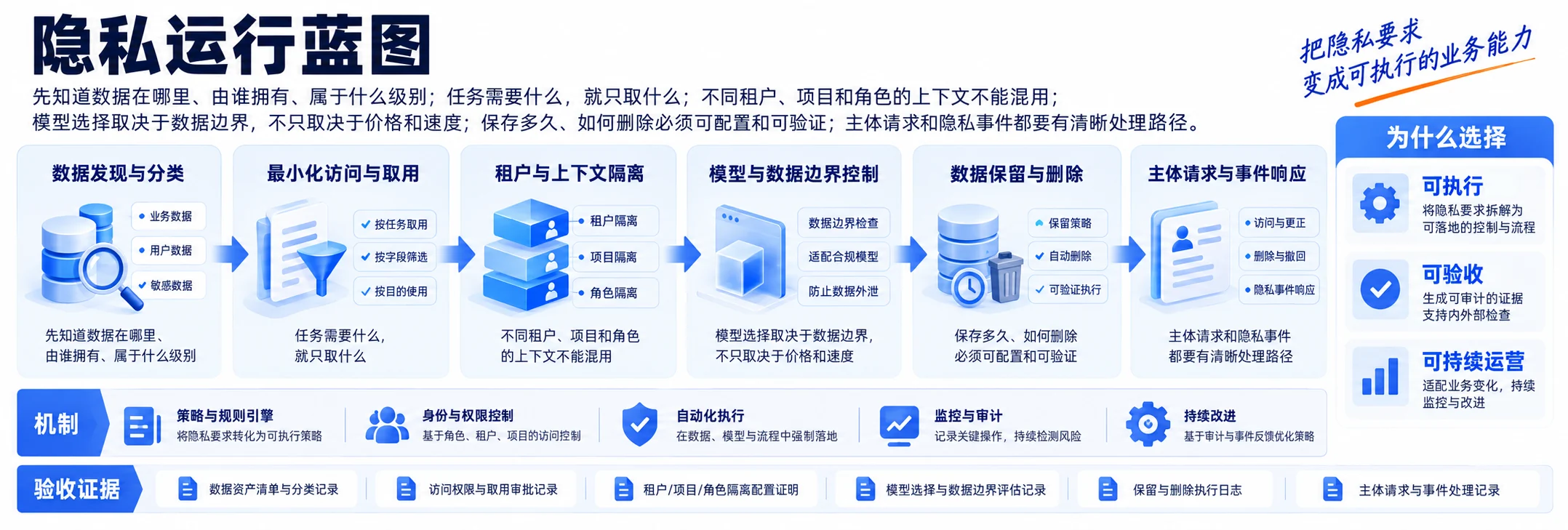
Data map
Know where data lives, who owns it, and how it is classified
Map business data, logs, backups, model context, and external connections before setting residency and ownership boundaries.
Execution steps
- 01
Inventory data sources and outputs
- 02
Classify sensitivity and data subject
- 03
Record region, processor, recipient
- 04
Build flow and ownership matrix
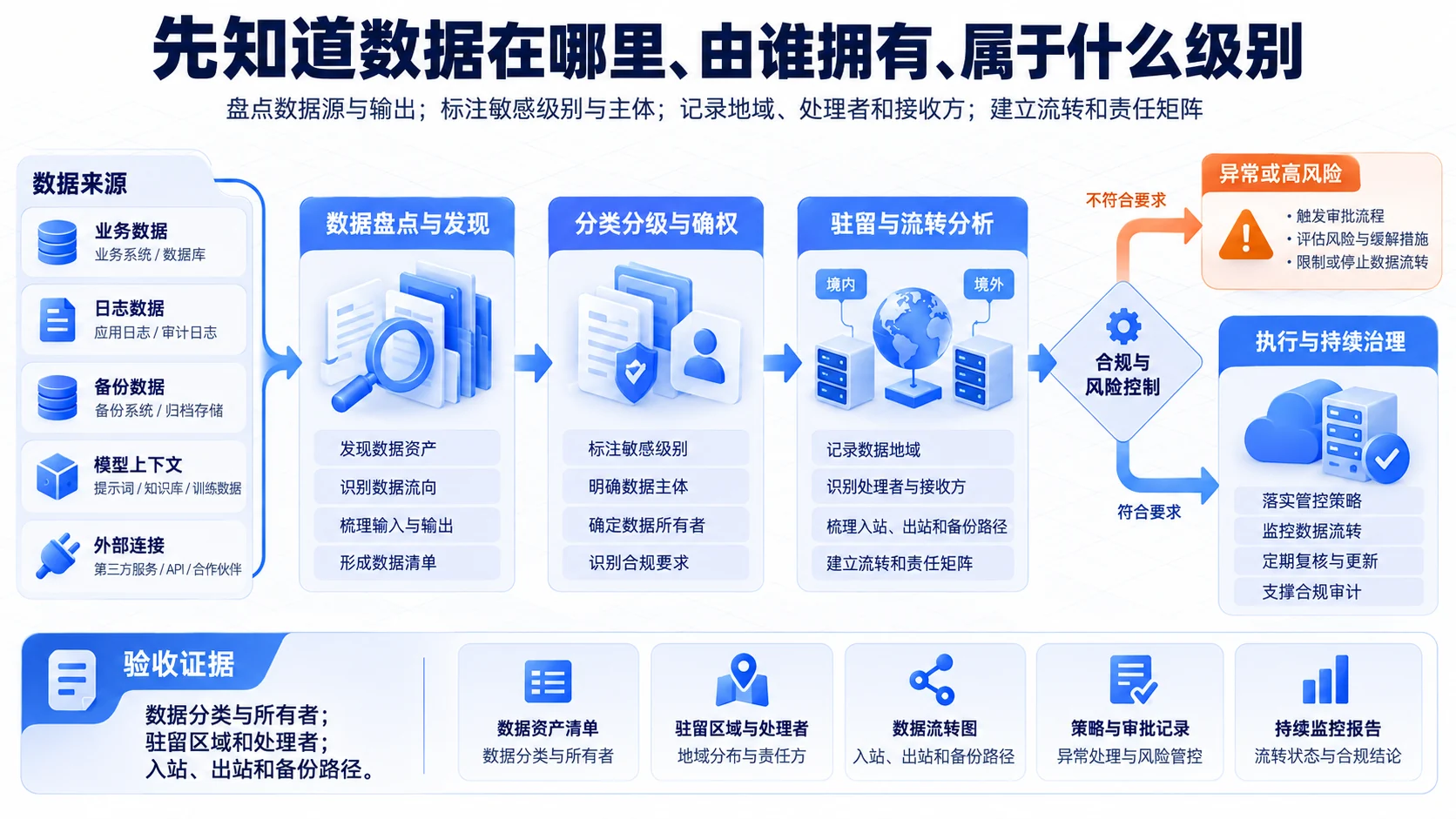
Purpose minimization
Take only what the task requires
Bind purpose, role, and object permissions into retrieval so model appetite never expands the data scope.
Execution steps
- 01
Define purpose and legitimate scope
- 02
Filter objects and fields
- 03
Remove irrelevant content
- 04
Record minimization rule
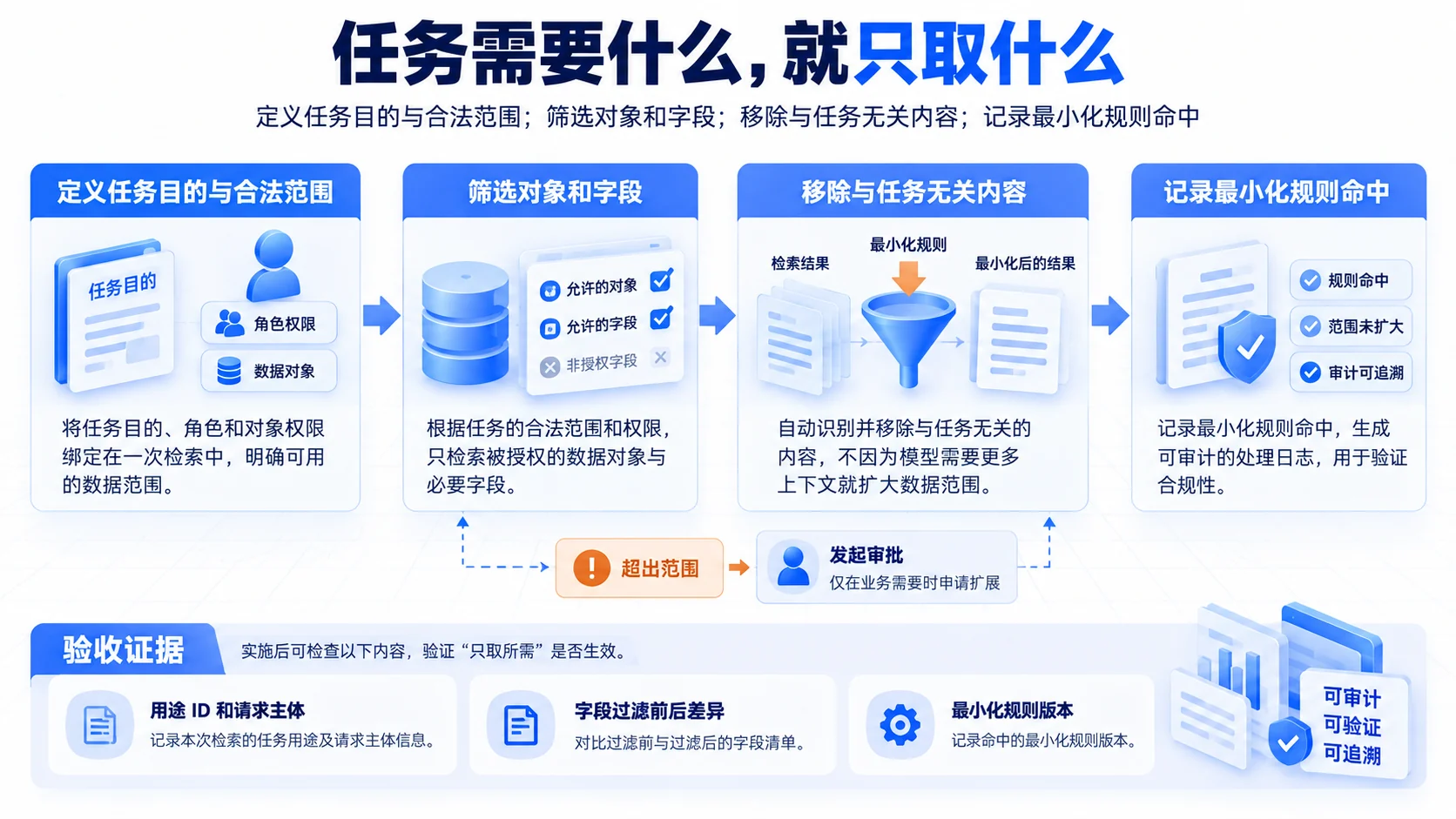
Context isolation
Do not mix context across tenants, projects, or roles
Retrieval, cache, session, and memory carry tenant and permission labels; cross-boundary reference requires explicit authorization and evidence.
Execution steps
- 01
Bind tenant and workspace to retrieval
- 02
Trim context blocks by role
- 03
Isolate cache, session, and memory
- 04
Handoff or block cross-boundary requests
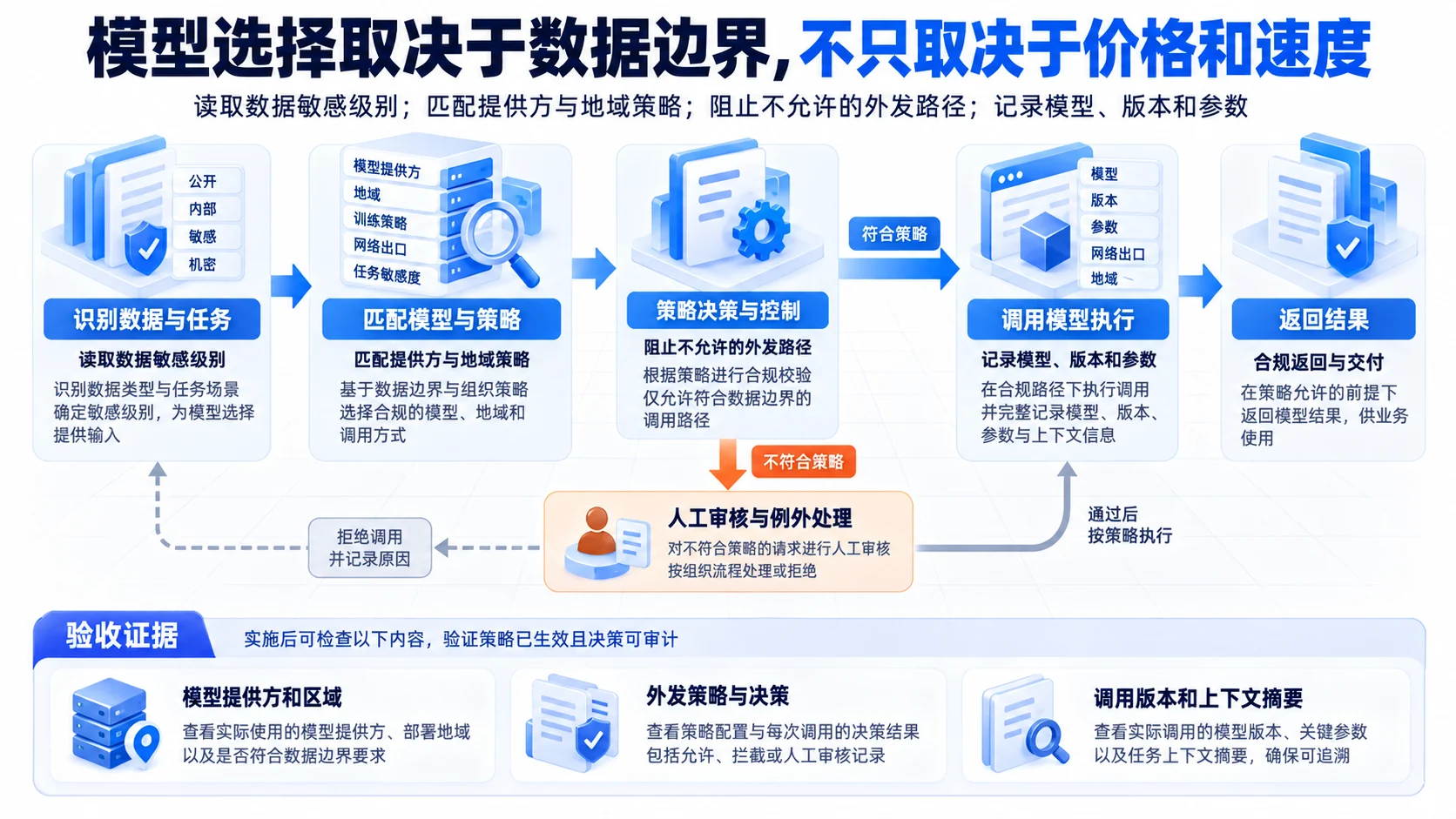
Model routing
Choose a model by data boundary, not only cost or speed
Route by provider, region, training policy, egress, and task sensitivity, with an auditable decision before invocation.
Execution steps
- 01
Read data sensitivity
- 02
Match provider and region policy
- 03
Block disallowed egress
- 04
Record model, version, parameters
Retention and deletion
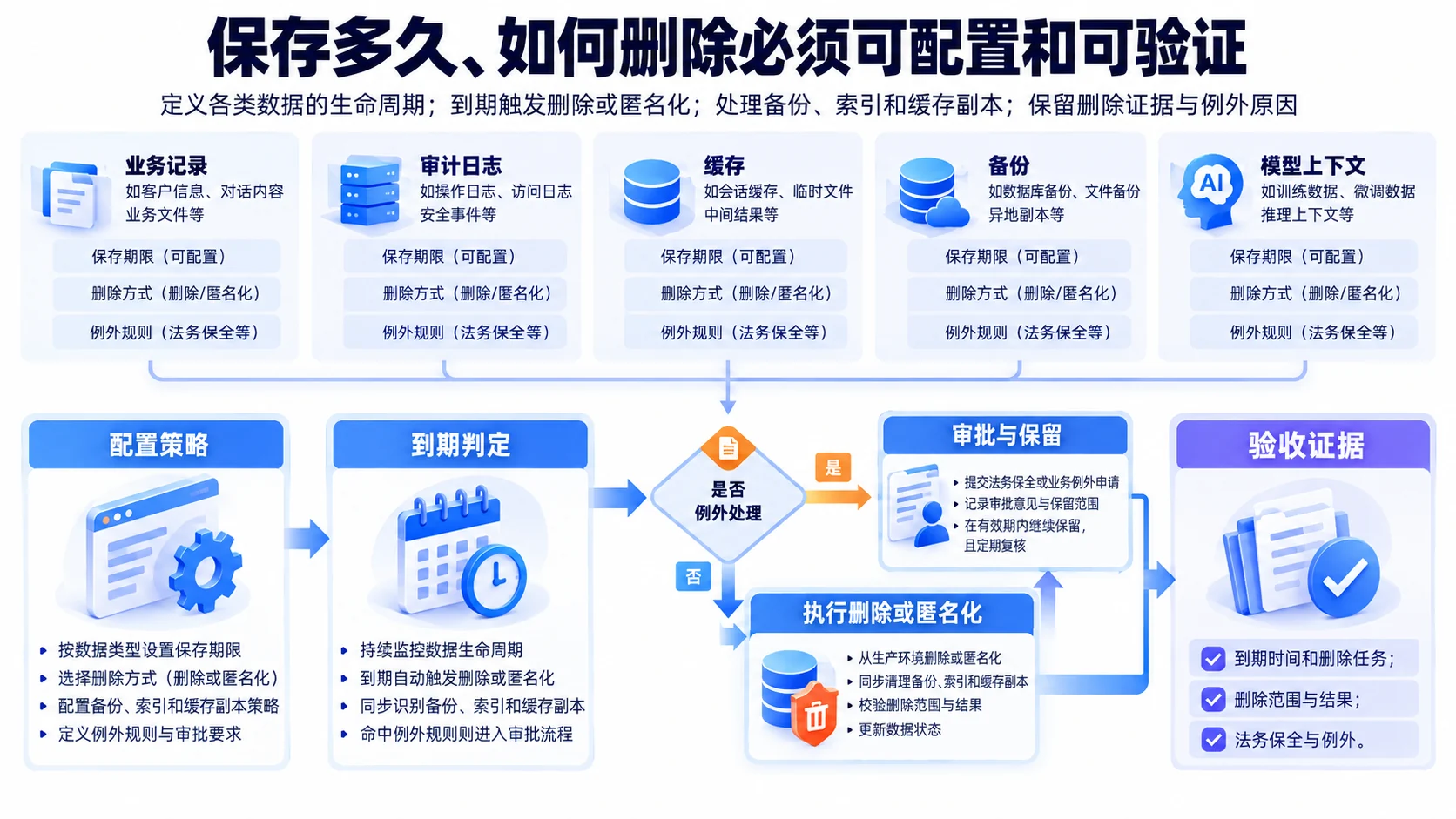
Make retention and deletion configurable and verifiable
Business records, audit logs, caches, backups, and model context have different lifecycles; define duration, deletion, and exceptions separately.
Execution steps
- 01
Define lifecycle per data class
- 02
Trigger deletion or anonymization
- 03
Handle backup, index, and cache copies
- 04
Keep deletion evidence and exception reason
Access and incidents
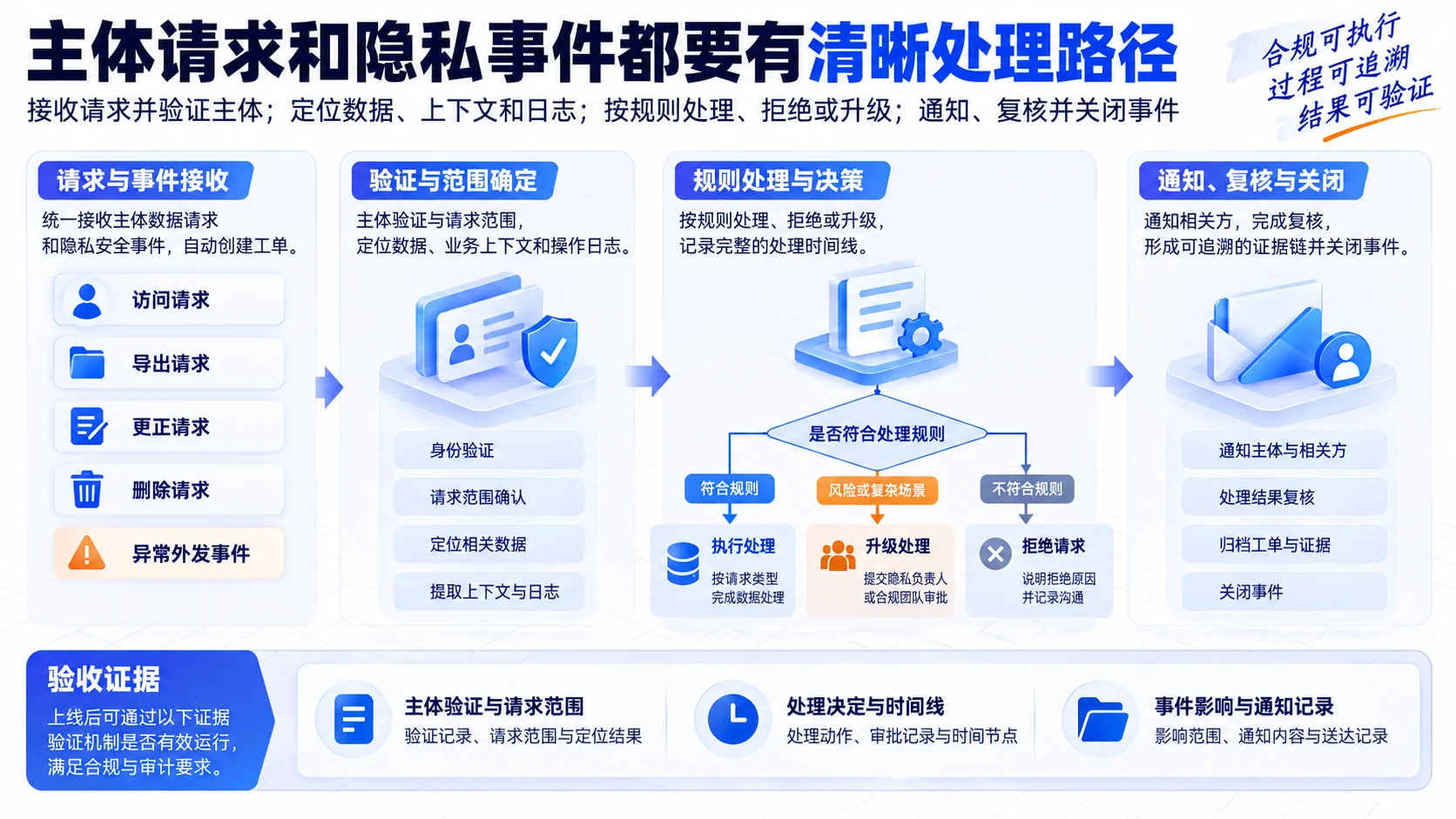
Give subject requests and privacy incidents a clear path
Access, export, correction, deletion, and unexpected egress share one workflow with deadlines, owners, and impact scope.
Execution steps
- 01
Receive request and verify subject
- 02
Locate data, context, and logs
- 03
Process, deny, or escalate
- 04
Notify, review, and close
Bring Privacy requirements into a real evaluation
We map the principle to an acceptance checklist for your data, workflow, deployment boundary, and owners.
Region, data, model, operations, and acceptance requirements still need to be confirmed item by item in the project assessment.