
SLO | Performance Budgets
Performance is shaped by data, concurrency, queues, tools, models, and topology. Break the budget down, then validate it with realistic load.
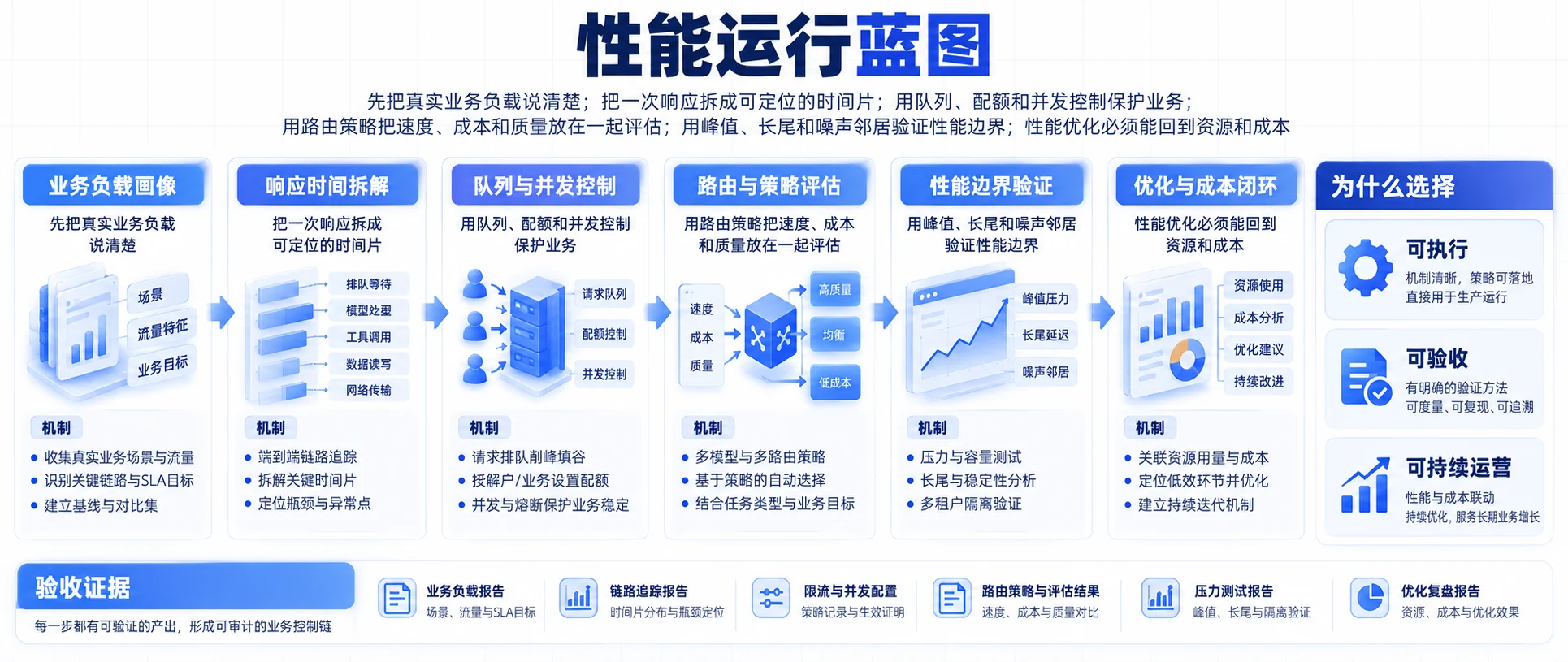
Workload model
Describe the real workload before tuning
Model task types, tenant tiers, peak windows, data, and dependencies instead of measuring one flattering average.
Execution steps
- 01
Sample real tasks
- 02
Segment by tenant and workflow
- 03
Define peak, burst, and tail
- 04
Lock target topology and version
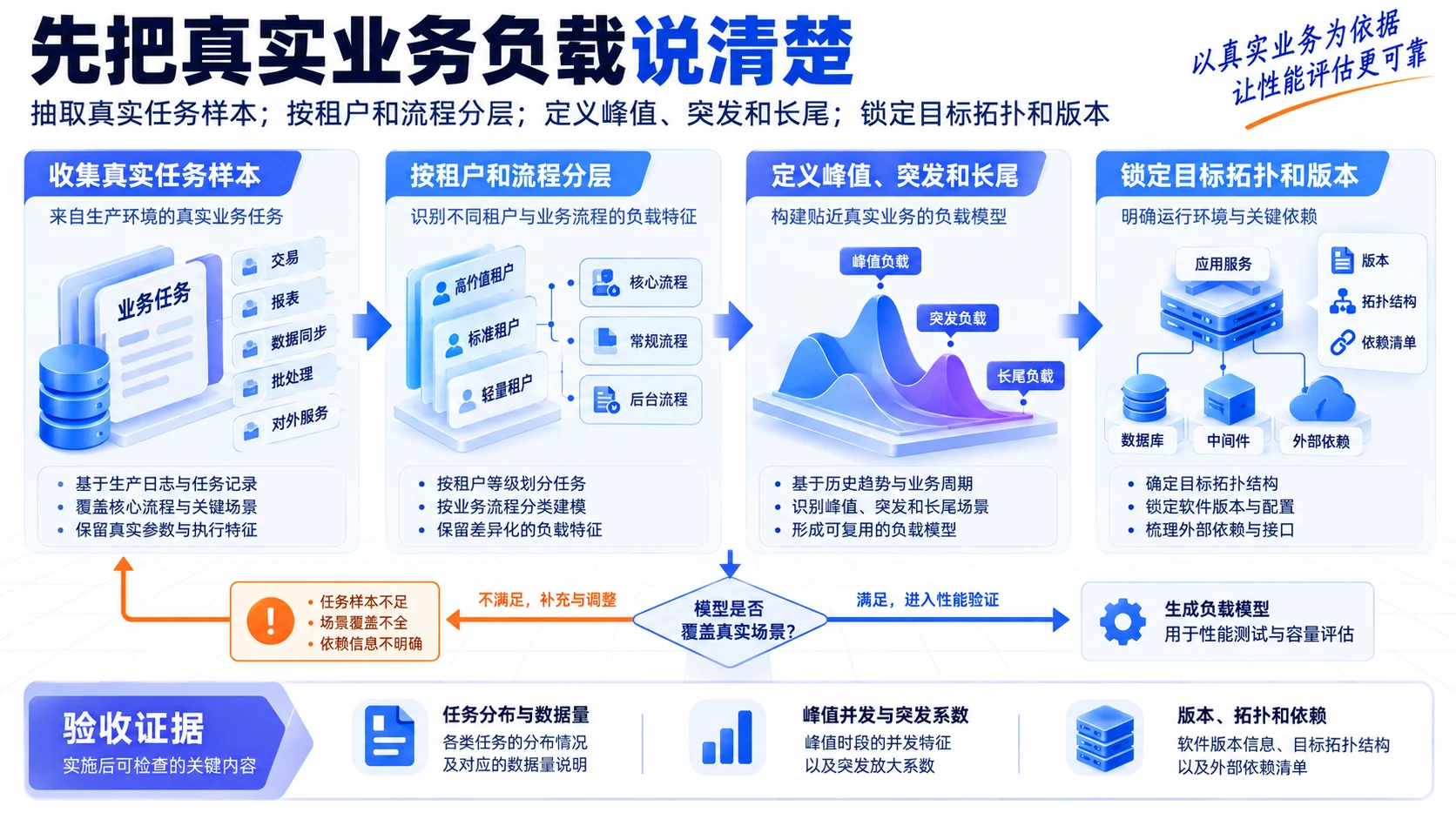
Latency budget
Split a response into diagnosable time slices
Total latency is retrieval, context, queue, model, tools, and writeback; each segment gets a budget so overruns are actionable.
Execution steps
- 01
Define end-to-end target
- 02
Allocate budget by stage
- 03
Record P50 / P95 / P99
- 04
Create actions for overruns
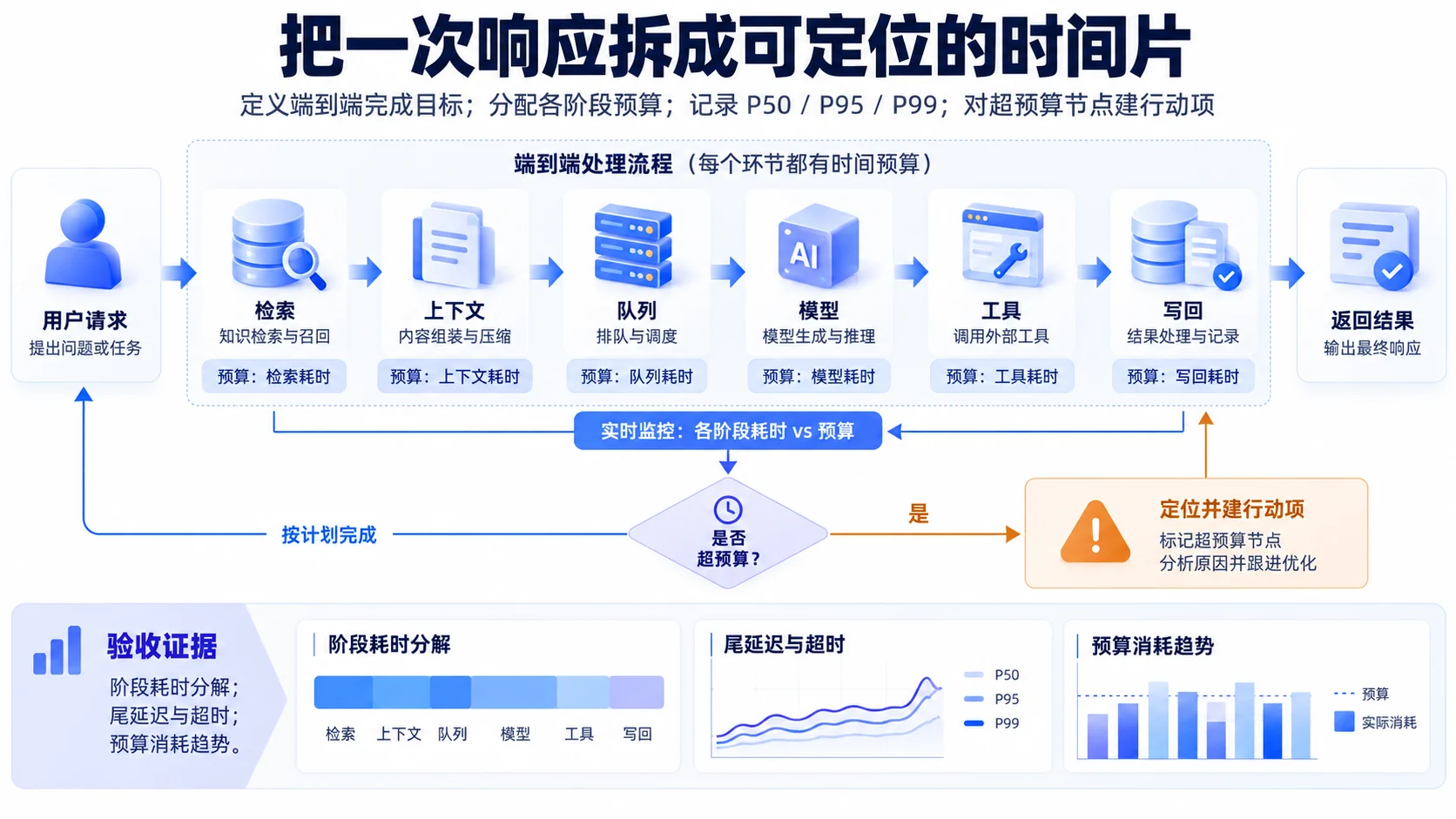
Queue and capacity
Protect workloads with queues, quotas, and concurrency
Put bursty work in observable queues and allocate concurrency by tenant and priority so one long task cannot starve the system.
Execution steps
- 01
Split queues by task type
- 02
Set tenant quota and priority
- 03
Monitor wait, run, failure
- 04
Trigger throttle or scale
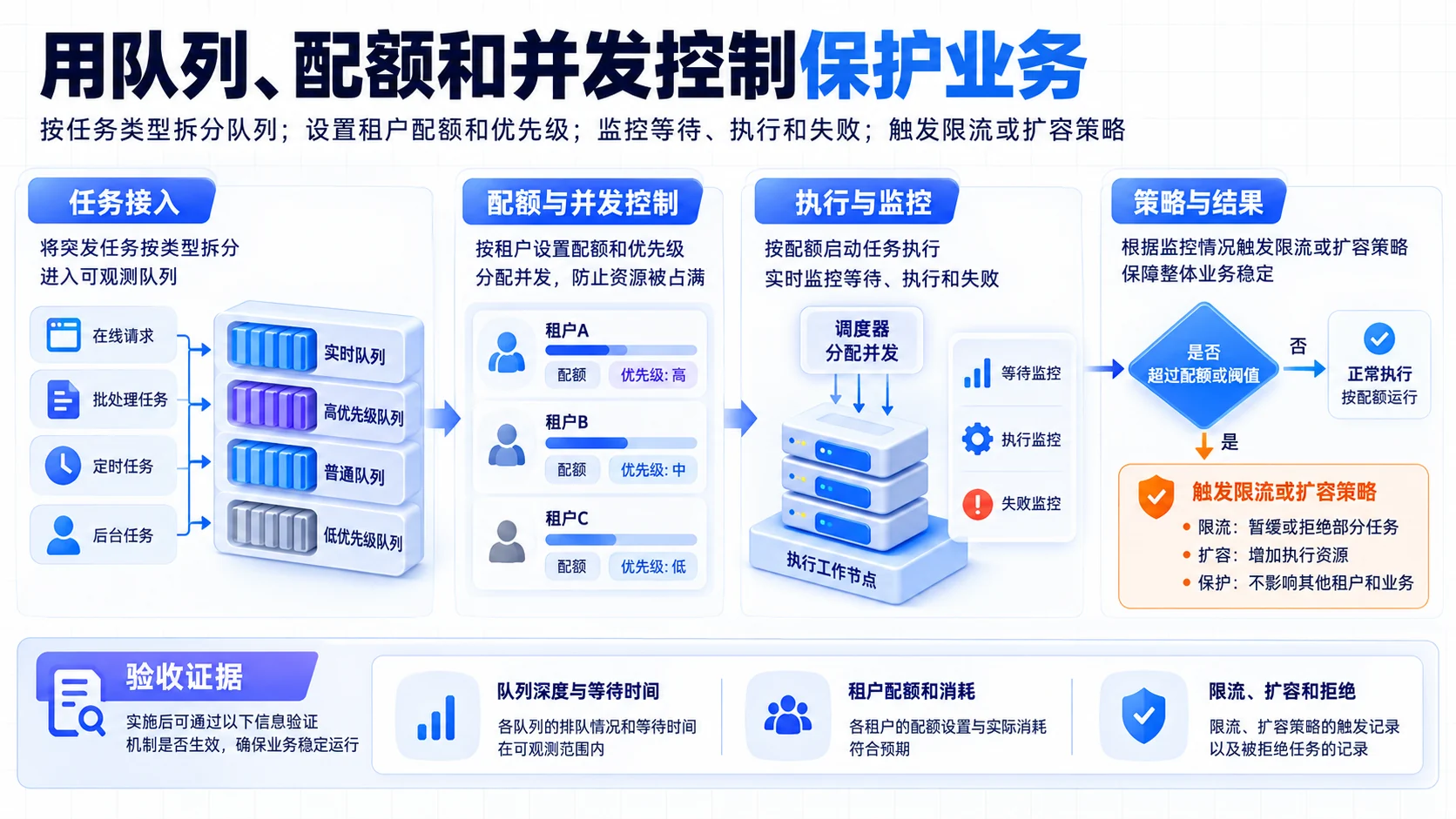
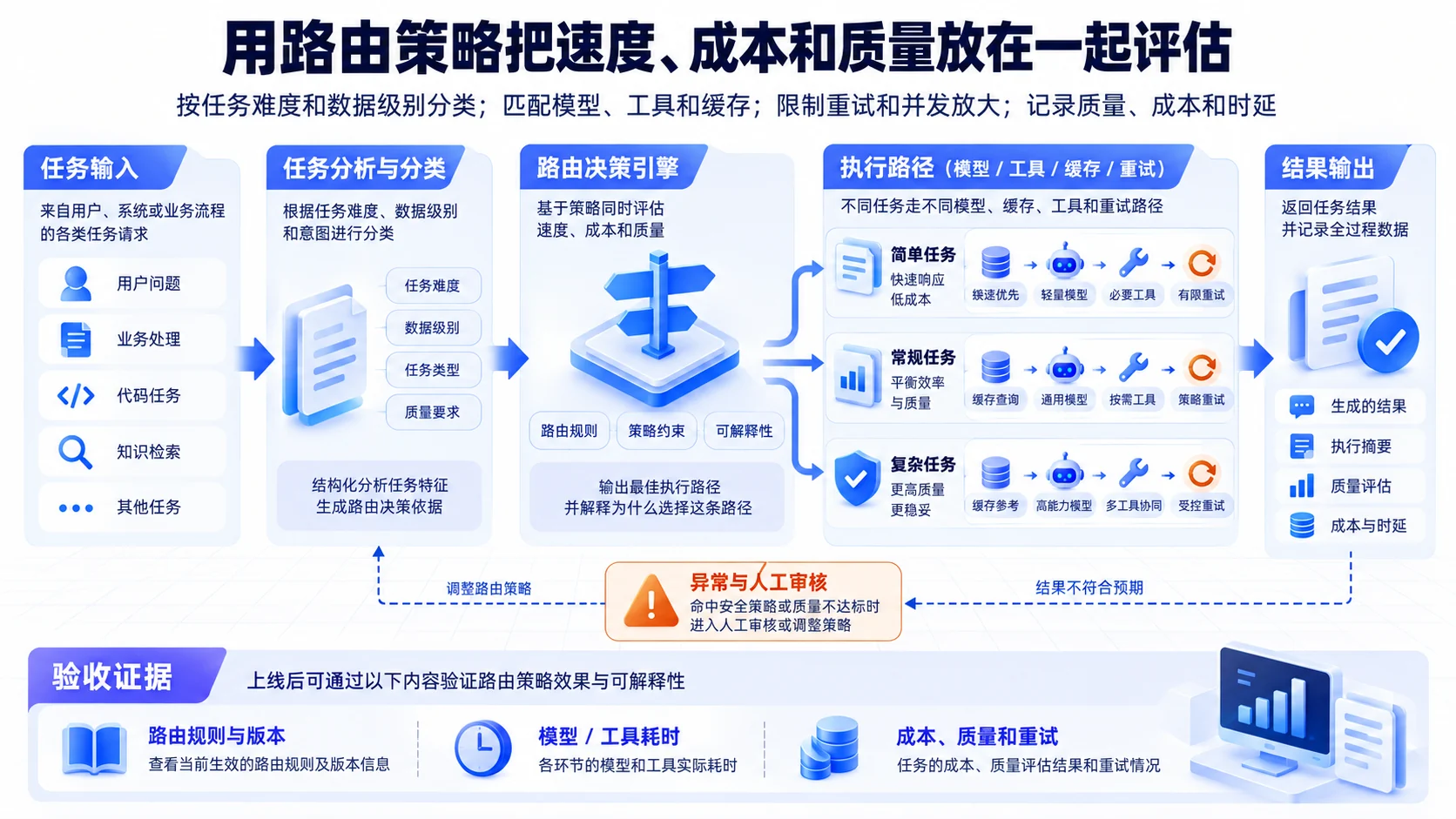
Model and tool routing
Evaluate speed, cost, and quality with routing
Different tasks use different models, caches, tools, and retry paths; routing should explain why a path was chosen.
Execution steps
- 01
Classify by difficulty and data
- 02
Match model, tool, cache
- 03
Bound retries and fan-out
- 04
Record quality, cost, latency
Load and isolation
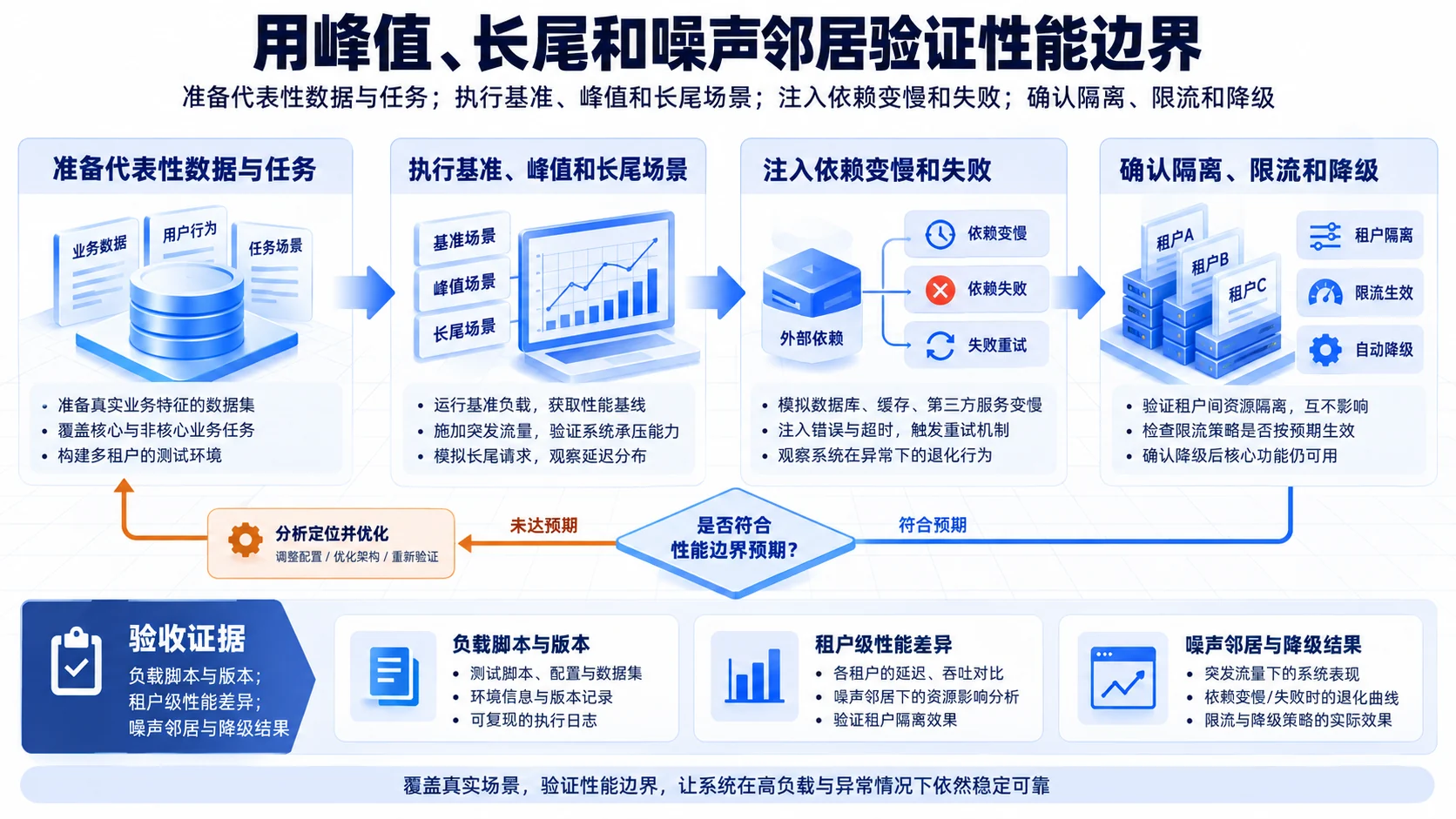
Validate peak, tail, and noisy-neighbor boundaries
Test more than average speed: validate tenant isolation, burst traffic, slow dependencies, and degradation under retries.
Execution steps
- 01
Prepare representative data and tasks
- 02
Run baseline, peak, tail
- 03
Inject slow and failed dependencies
- 04
Verify isolation, throttle, degrade
Observability and cost
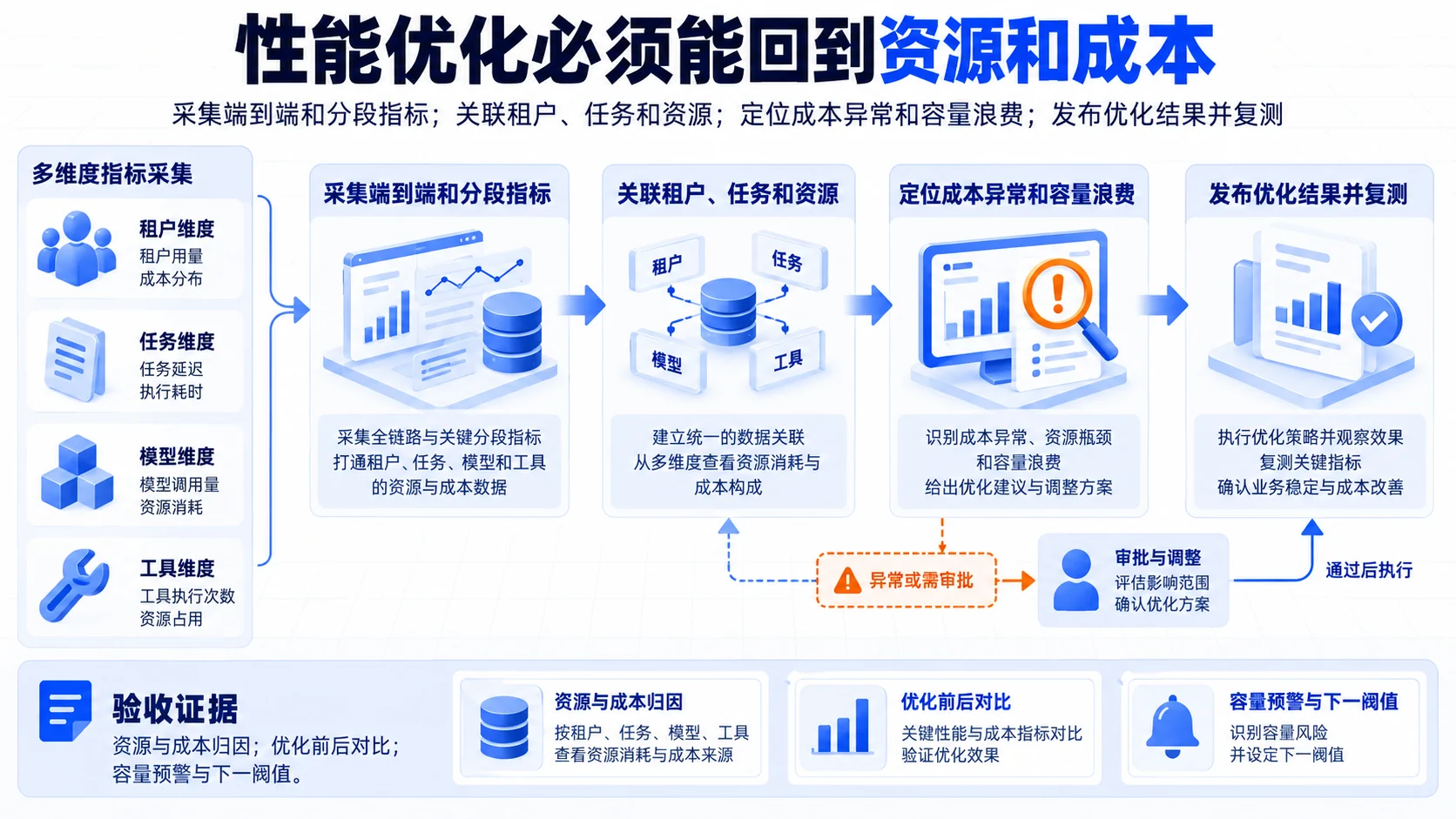
Tie performance optimization to resources and cost
Use tenant, task, model, and tool metrics to expose bottlenecks and cost, then compare business outcomes after tuning.
Execution steps
- 01
Collect end-to-end and segment metrics
- 02
Correlate tenant, task, resource
- 03
Find cost spikes and waste
- 04
Release optimization and retest
Bring Performance requirements into a real evaluation
We map the principle to an acceptance checklist for your data, workflow, deployment boundary, and owners.
Region, data, model, operations, and acceptance requirements still need to be confirmed item by item in the project assessment.