01
Define roles and responsibilities across multiple agents
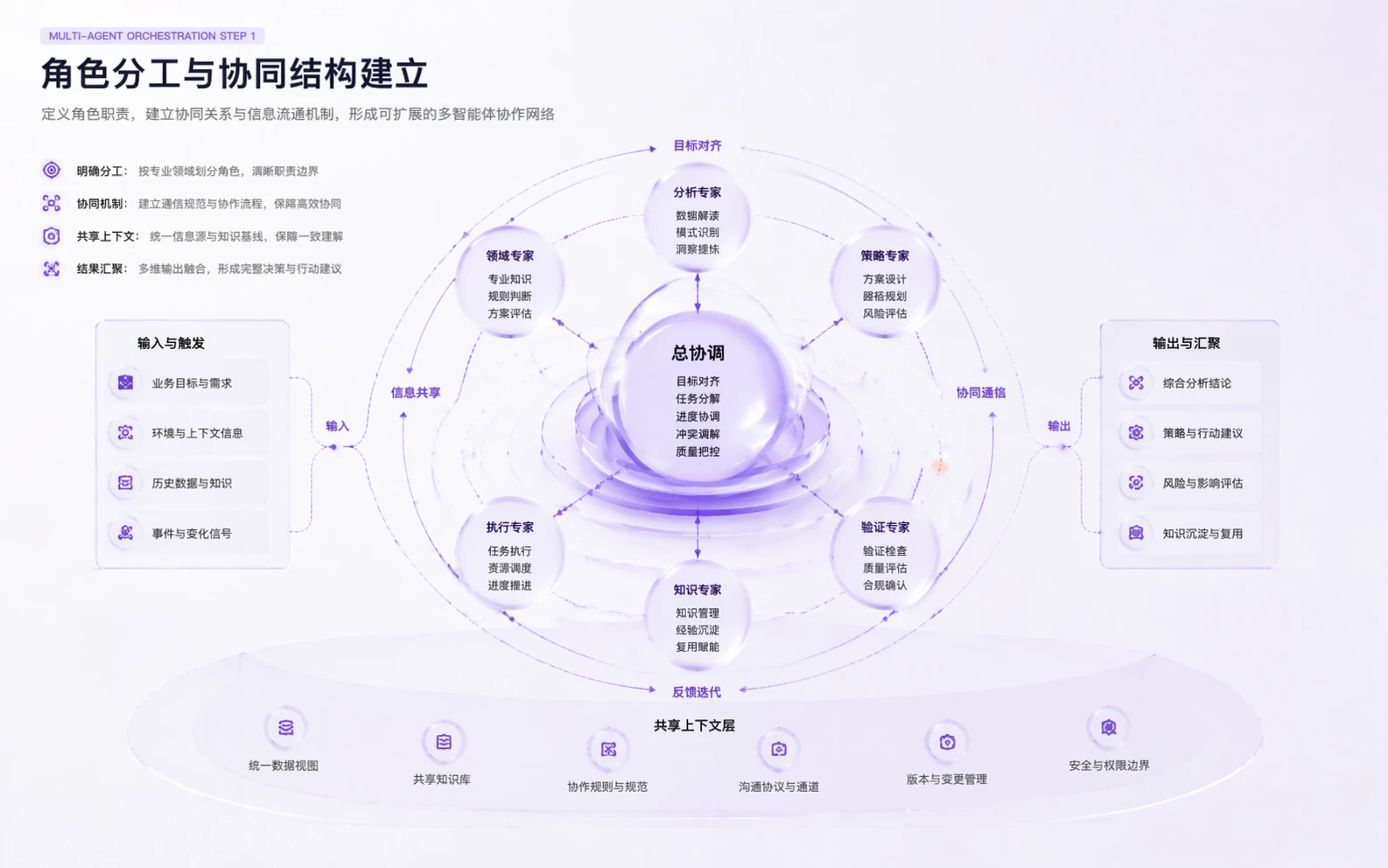
Different agents can own recognition, routing, execution, and escalation instead of forcing one assistant to do everything.

Multi-Agent Orchestration
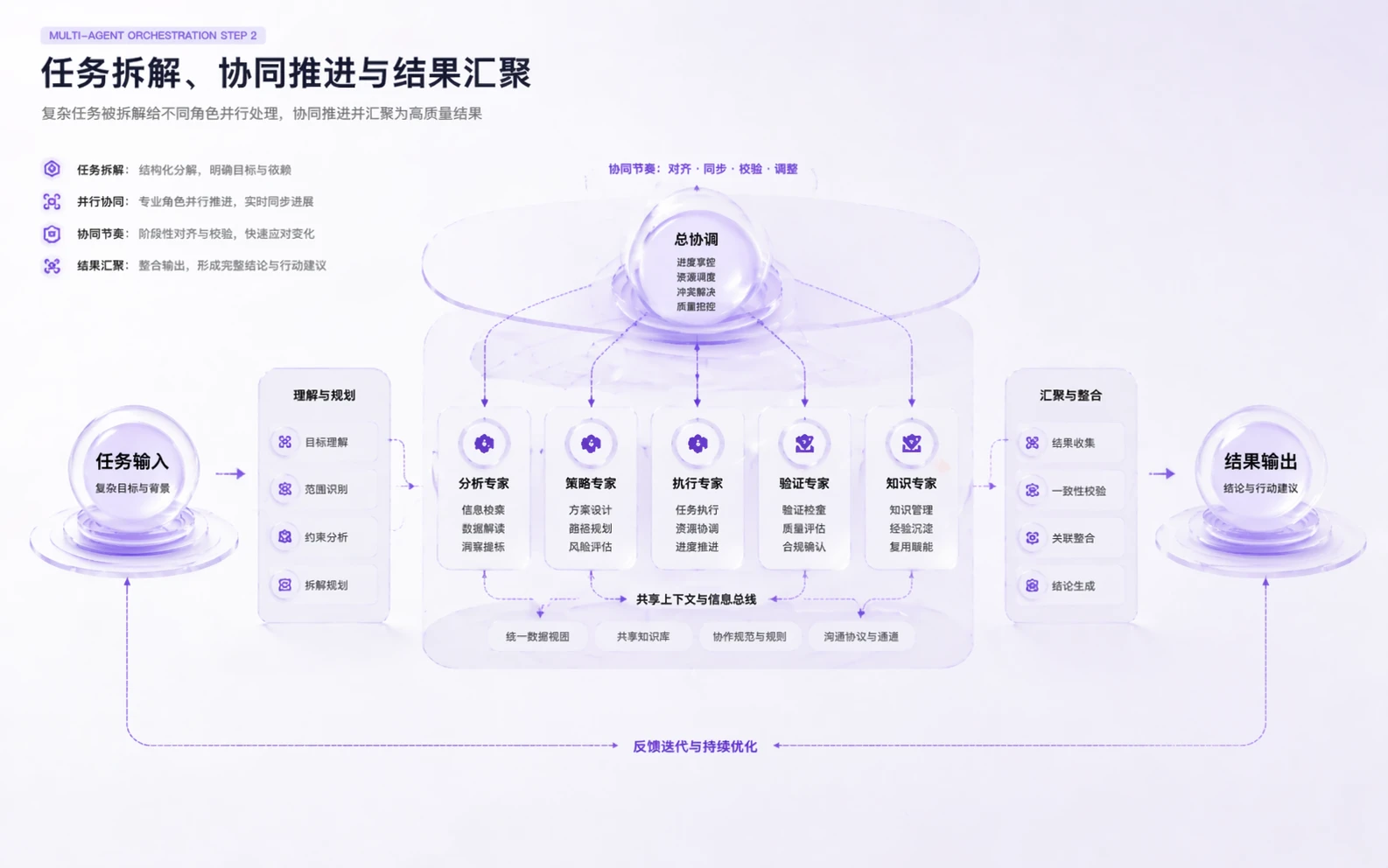
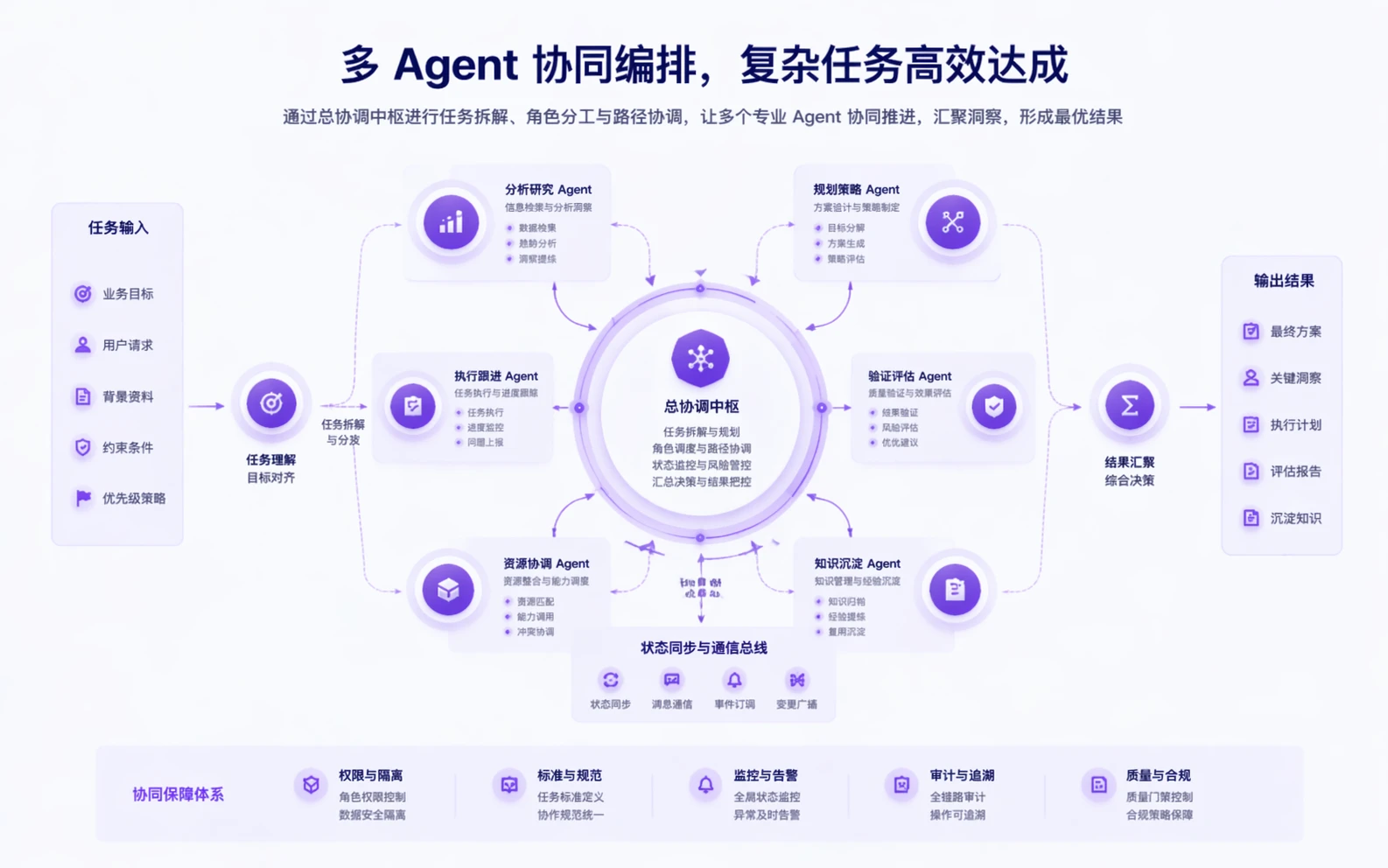
Break complex execution into clearer roles, handoff rules, and responsibility checkpoints so enterprise workflows do not collapse into one oversized assistant.
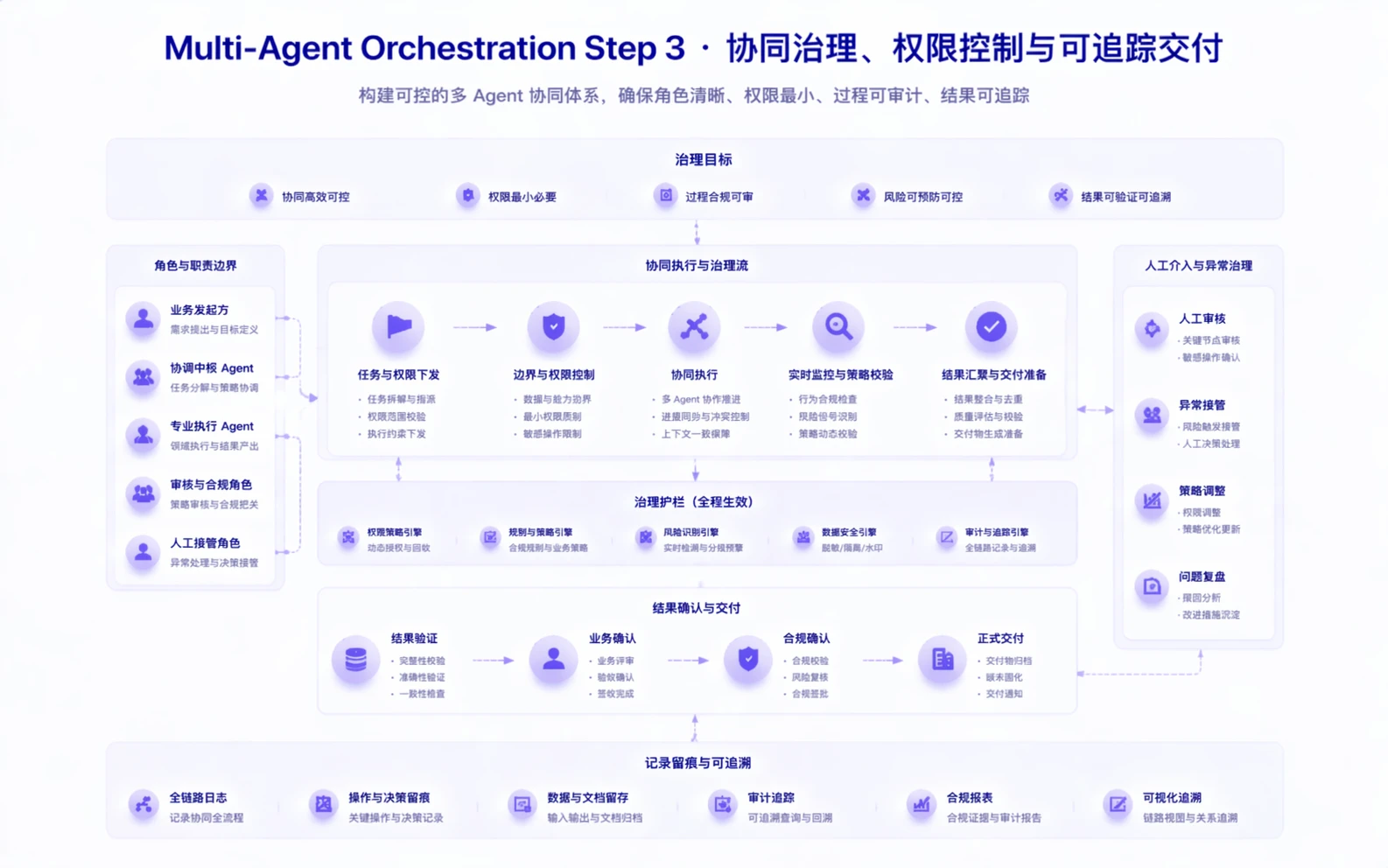
Real business execution is rarely handled by one agent alone. A stronger enterprise pattern is multiple agents working together inside one governance model.

How it works
Define distinct agent roles, handoff logic, and escalation paths around one business chain so complex execution stays structured and reviewable.
01
Different agents can own recognition, routing, execution, and escalation instead of forcing one assistant to do everything.

02
Multi-agent coordination is not just chaining outputs. Teams need to know when work passes to another agent and when it must go to a human.

03
Even when several agents participate, teams still need to see how the workflow progressed, who touched each step, and how the result formed.

If your business needs multiple agents to divide work, hand off clearly, and preserve one accountability chain, Multi-Agent Orchestration will feel much closer to the real operating model.